history


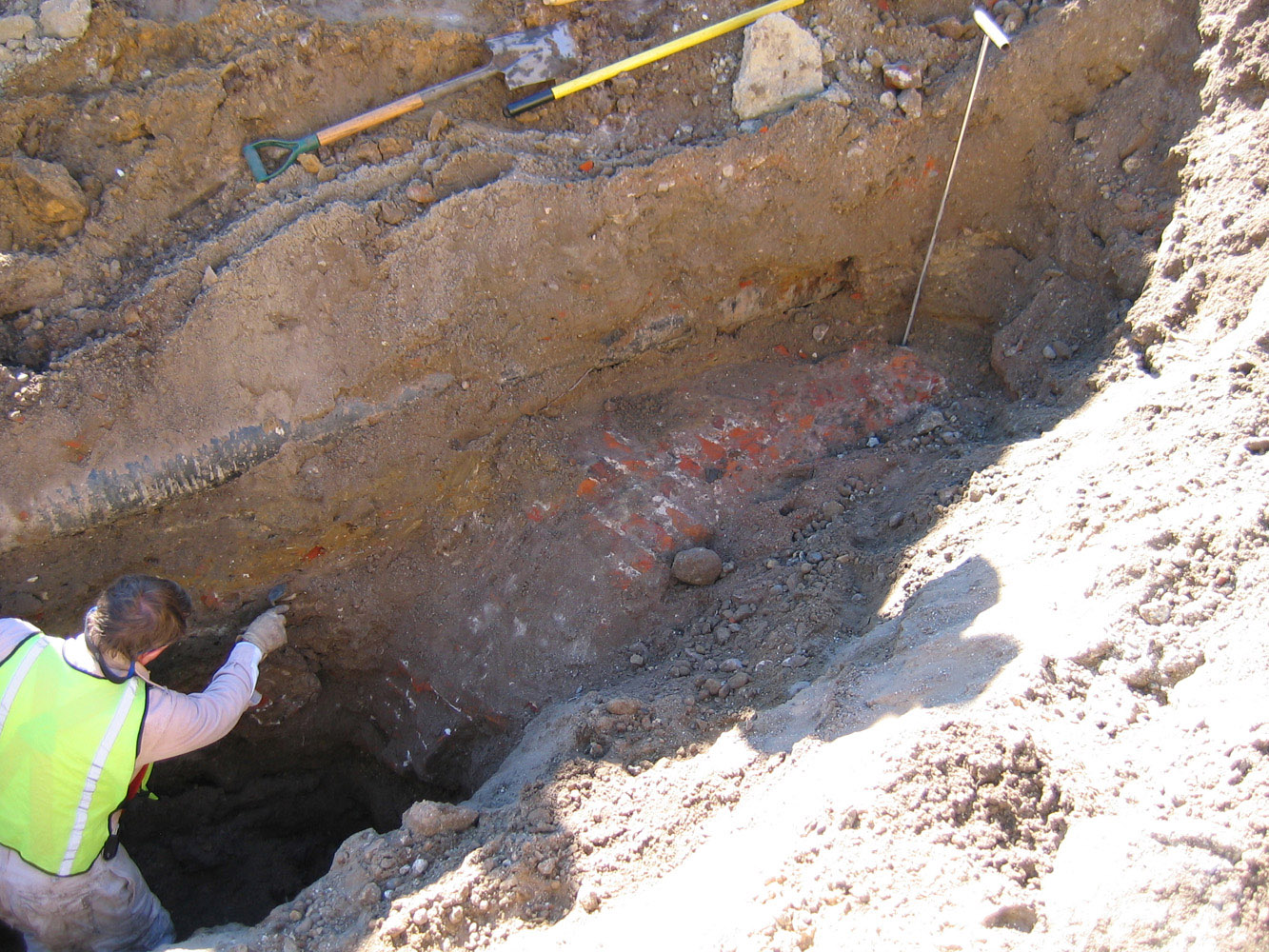
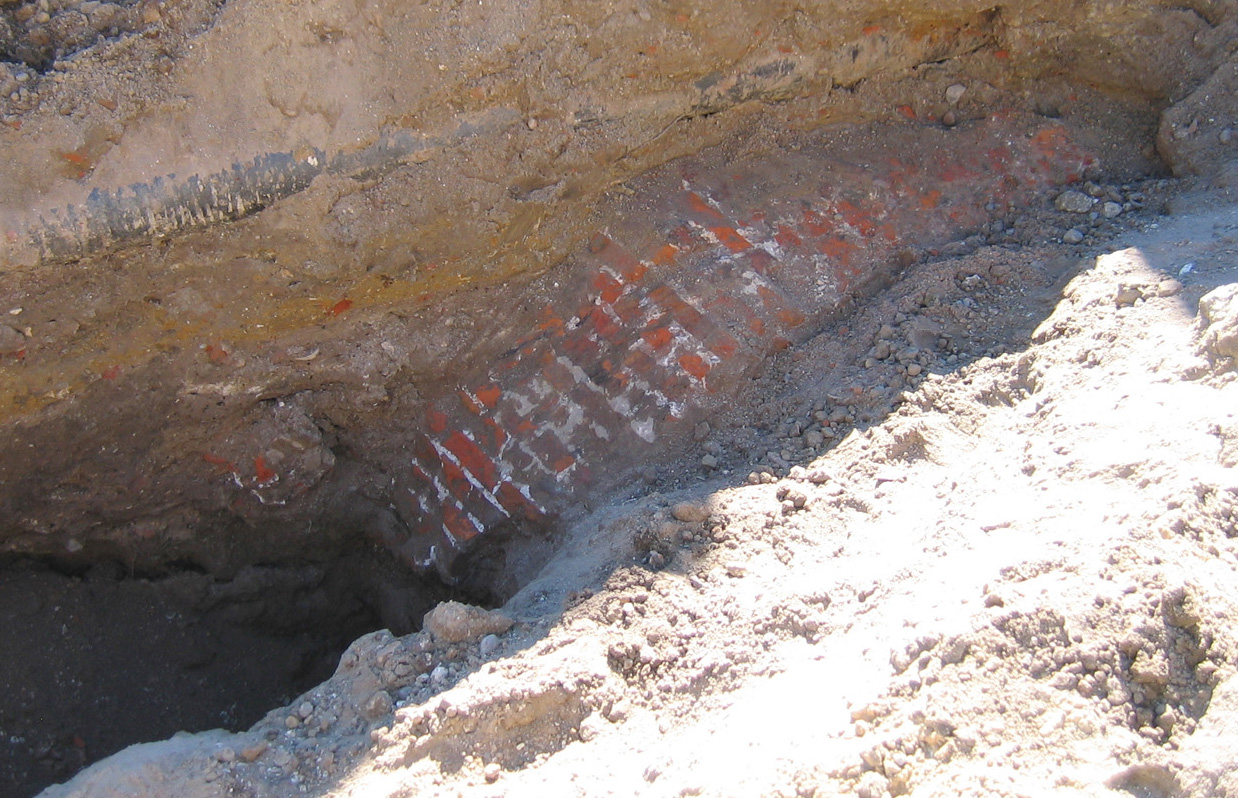
poplin_and_redan.jpgThe second day of archaeology at South Adger’s Wharf started with a frosty chill, but the cool weather didn’t dampen the anticipation and excitement in the air. The second trench, opened on Thursday afternoon, was widened and lengthened in the hopes of encountering some remnants of the brick redan that was started in 1696 and demolished in 1785. At approximately 11:45 a.m., an excited cheer rang out from the site, signaling that something truly interesting had been found. After seeing large numbers of paving bricks from the nineteenth century yesterday, the crew uncovered a large mass of bricks and mortar that appeared to be part of something much more substantial.

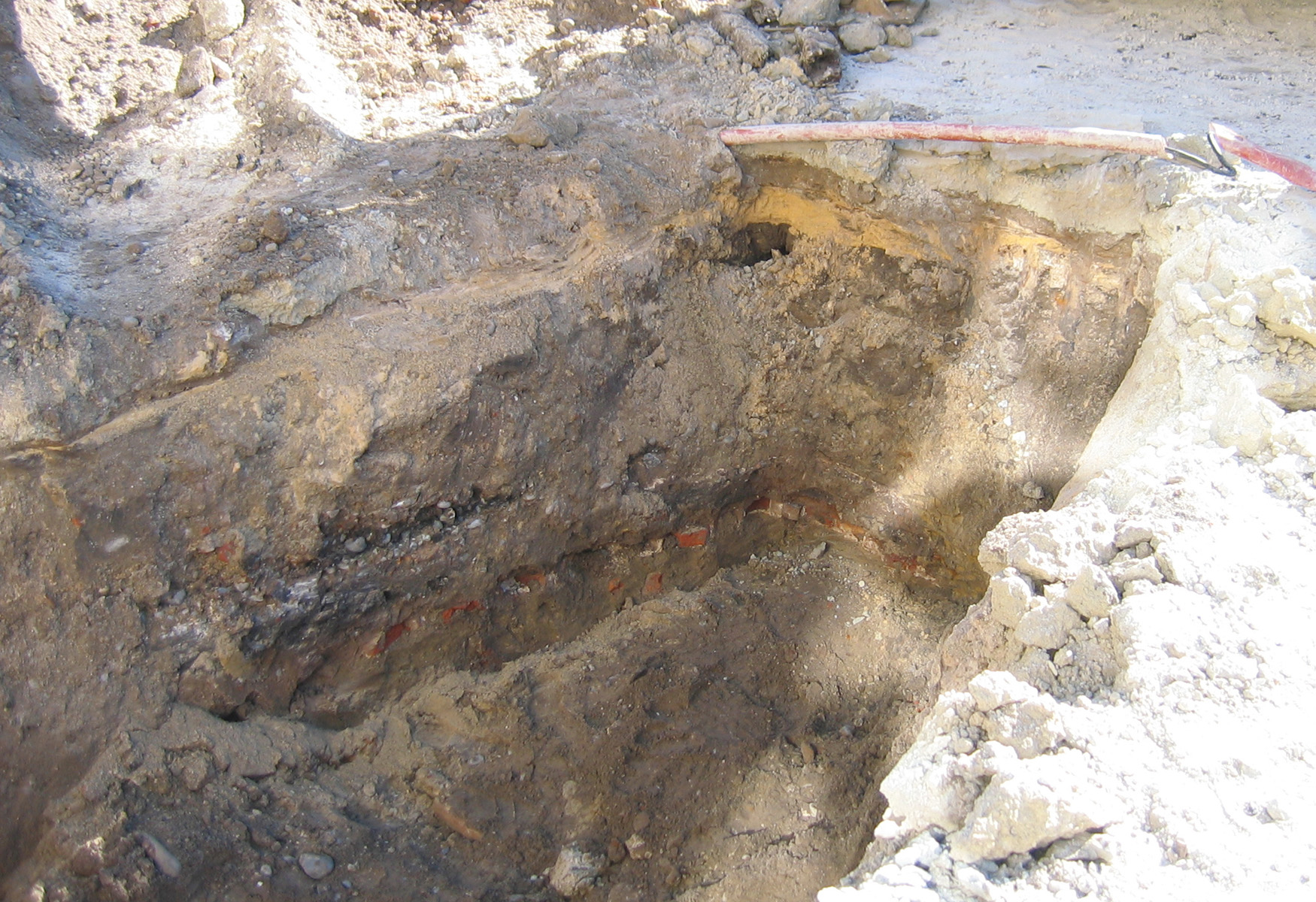
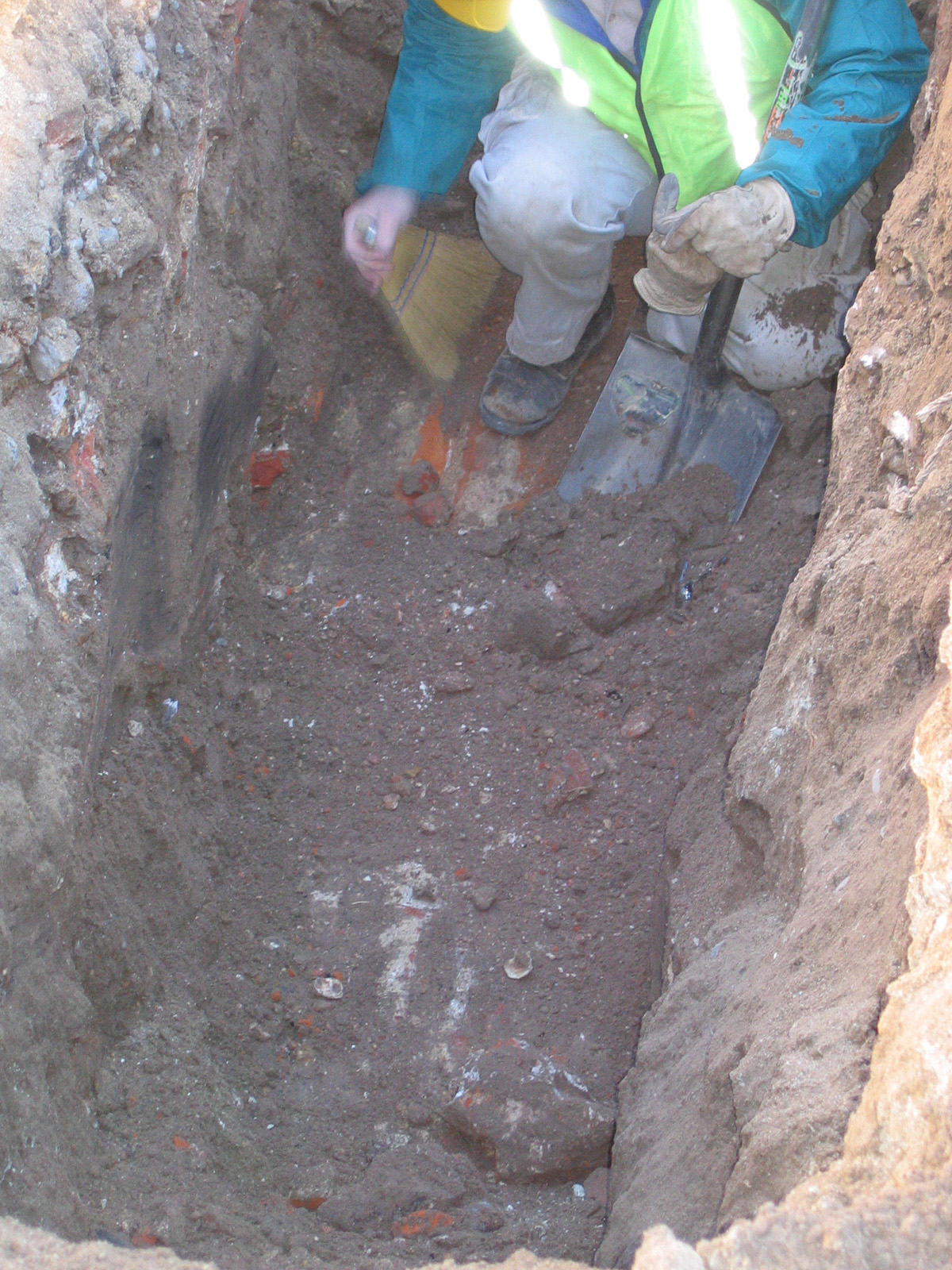
redan_fragment_01.jpgMembers of the Mayor’s Walled City Task Force all agreed that this brick mass was likely part of the south flank of the salient angle or redan that projected outward from colonial Charleston’s eastern curtain line, but there are still several lingering questions about its precise identity. The location of this brick mass, which is laid in English bond, seems to match that indicated by eighteenth-century plats of the site, but none of the visible surfaces appear to represent an original finished face or exterior surface. The demolition of the redan in 1785 undoubtedly left scars on the surviving remnants, and there is ample brick rubble surrounding this feature to emphasize that point. On Monday we’ll have a chance to explore the area around (and below) this mass of bricks, the 1696 foundation of which should be especially interesting. Hopefully by Tuesday we’ll have a more confident opinion exactly what we’ve found. redan_fragment_02.jpg
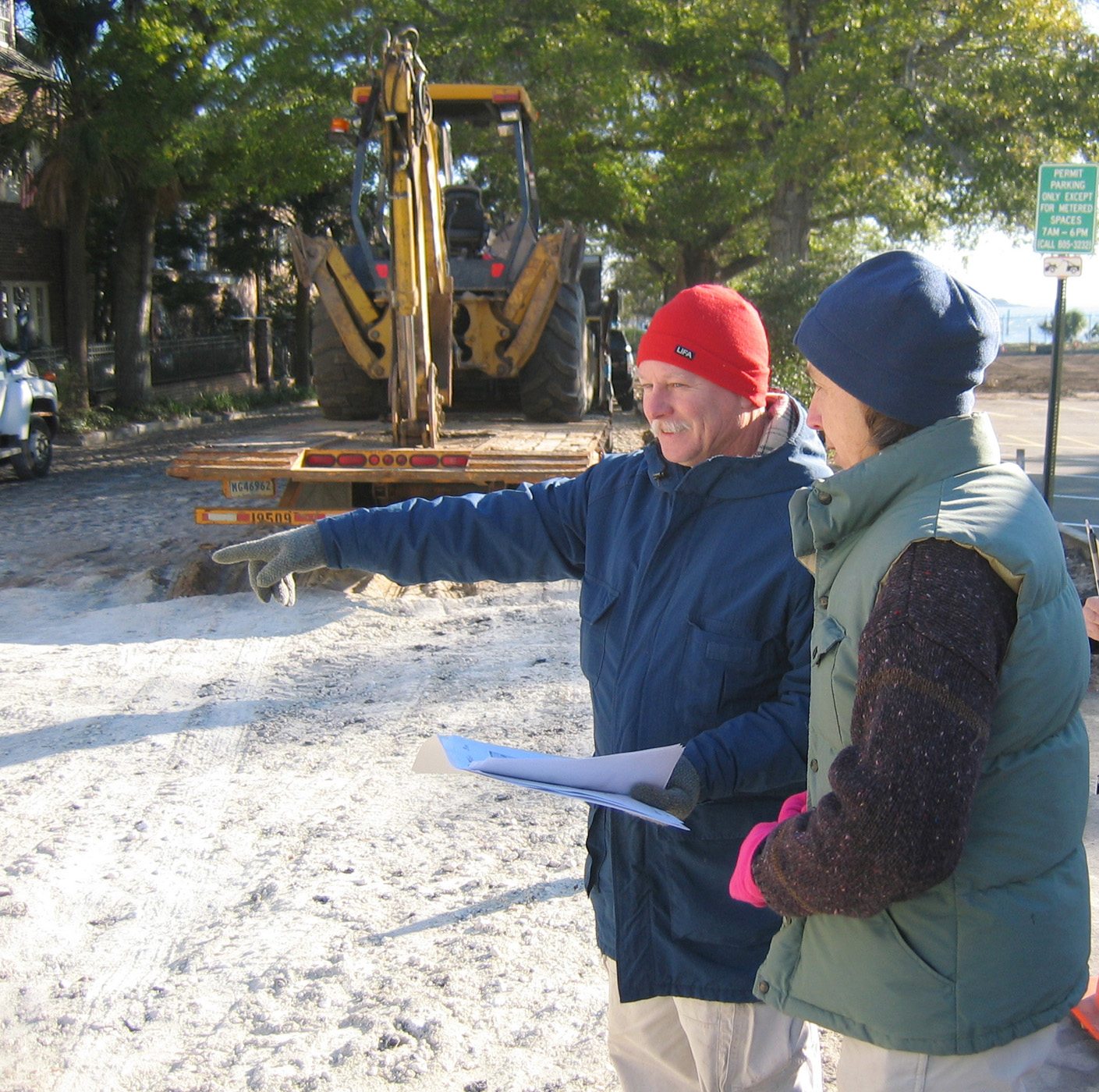
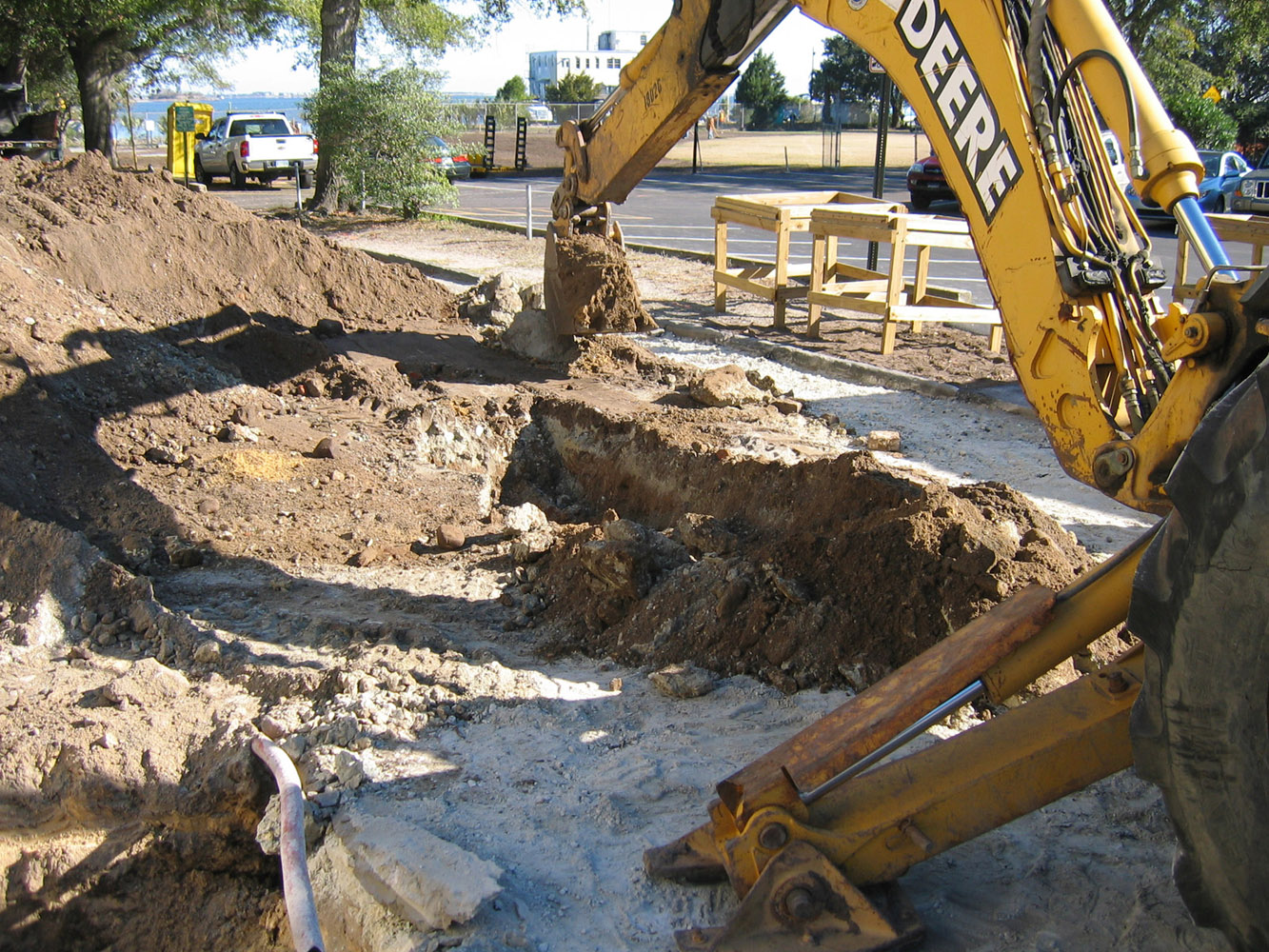
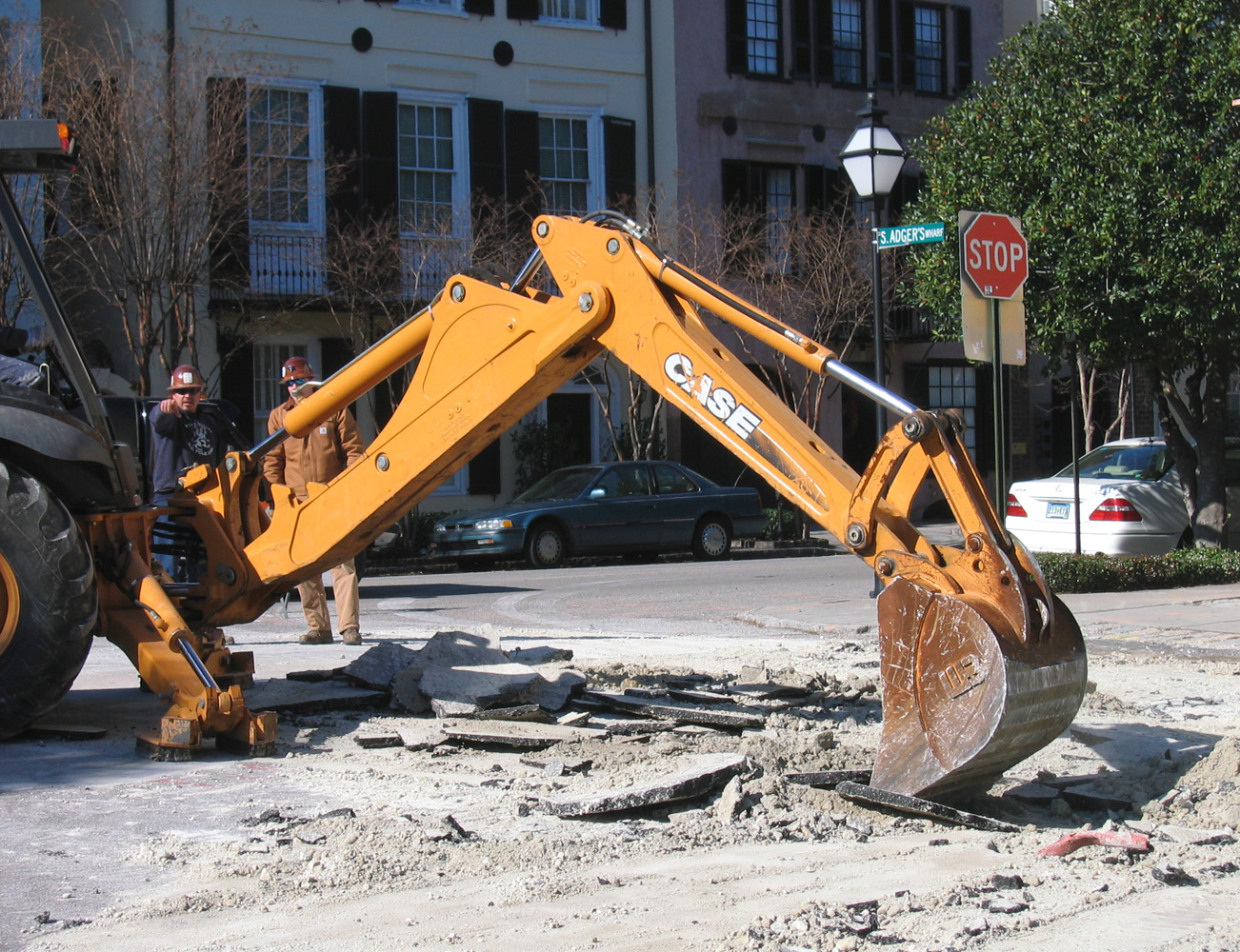
poplin-__zierden.jpg Members of the Mayor’s Walled City Task Force gathered at South Adger’s Wharf (SAW) this morning at 9 a.m. for a chilly start of the long-anticipated archaeological dig. Under the direction of archaeologists Eric Poplin (of Brockington & Associates) and Martha Zierden (of the Charleston Museum), the well-skilled backhoe operators from Charleston Water System initiated the dig with a narrow north-south trench from the northern edge of the site. old_street_surface.jpgA consistent layer of brick rubble and stones was found soon within the first few feet, but after closer inspection these materials proved to be the remnants of an older street surface that permeates the site. The digging continued, and by noon the trench had been widened to the west and lengthened southward without encountering any exciting features.

trench_02.jpg After lunch, the team decided to initiate a second trench, perpendicular to and south of the first. Several feet down the new trench revealed the slightly-arched top of a brick drain running east-west, the age of which is not yet clear. trench_2_drain.jpgAt the east end of this drain appeared to be a mass of bricks unlike anything else yet encountered. Could this perhaps be part of the foundations of the brick redan constructed on this site more than three hundred years ago? Unfortunately, the clock had expired for the day. The answer to this tantalizing question will have to wait until tomorrow.

south_adgers_wharf_004a.jpgThe long-anticipated archaeological dig at South Adger’s Wharf in downtown Charleston will commence early Thursday, the 3rd of January, 2008. Temperatures will be uncomfortably low for many Charlestonians, perhaps hovering around the freezing point, but the work must go forward in order to keep pace with the city’s schedule for completing the utility work at this site.

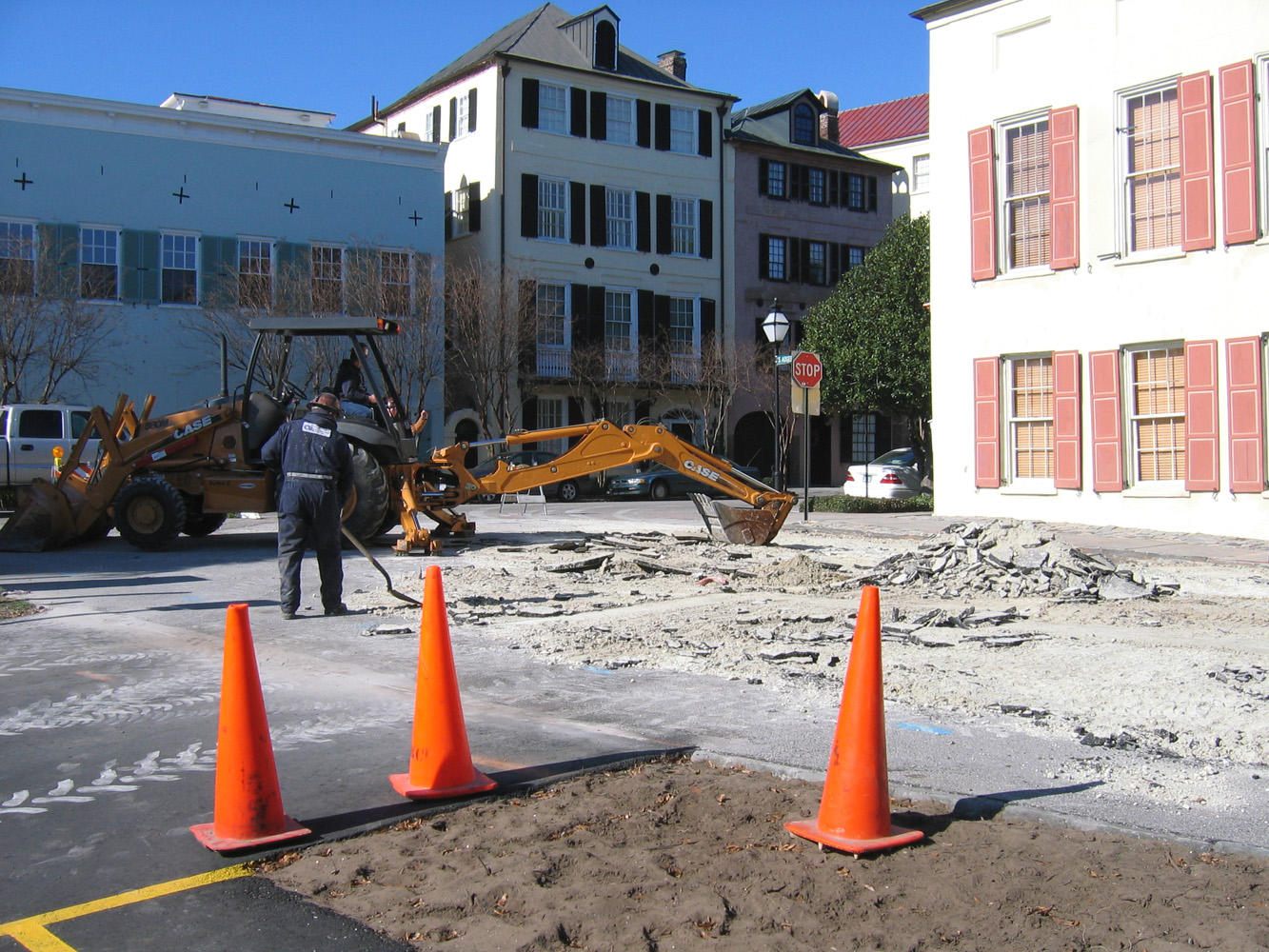
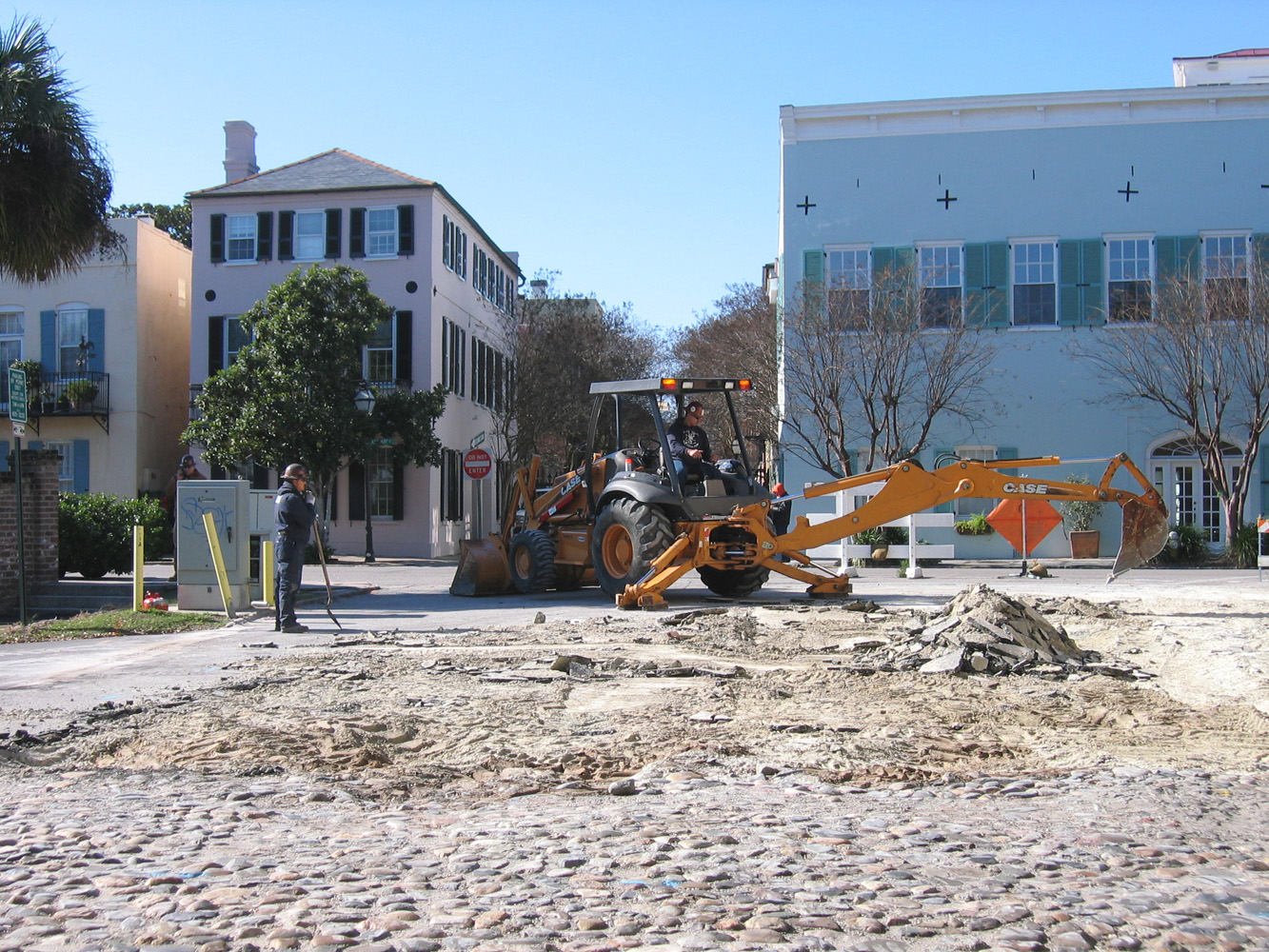
south_adgers_wharf_002a.jpg For those of you who didn’t happen to witness the activity at the dig site today, a work crew used a backhoe to remove the temporary blacktop from the west end of South Adger’s Wharf. The exposed site, measuring approximately fifty feet square, is now plain dirt, but by the end of January it will be restored to its former state as a cobblestone lane.

south_adgers_wharf_005a.jpg Over the next two weeks, archaeologists will explore the site with the hopes of finding evidence of various features from Charleston’s colonial past. The dig will commence on Thursday morning with a trench running north-south through the site, hopefully encountering the foundations of the three-hundred year old brick redan that once dominated the site.

south_adgers_wharf_003a.jpg

Many in Charleston have heard members of the Mayor’s Walled City Task Force talk enthusiastically about the anticipated archaeology at South Adger’s Wharf. Yes, funds have been made available to initiate that work, a team has been assembled, and detailed plans have been formed. But, alas, no earth has yet been turned. The work that was tentatively proposed to commence in mid-October has been repeatedly nudged back from week to week as the contractors and subcontractors working on the adjacent utility project have worked diligently to complete their final tasks. The final clean-up of their site is nearly finished, however, and will soon leave only the asphalt blacktop at South Adger’s Wharf–the proposed dig site–to be removed. The holiday season is now upon us, though, rendering it nearly impossible to muster and the necessary forces to start the dig and to sustain the momentum required to complete it. In short, the postponement continues.

After weighing the factors, the powers-that-be have agreed that we will earnestly plan to commence the archaeological dig at South Adger’s Wharf in early January. This final delay will allow the various contractors time to fulfill their obligations and will permit the Walled City Task Force and its volunteers to disperse for the usual holiday festivities. This dig is a once-in-a-lifetime opportunity, so we can easily wait a few more weeks. Come January, however, we hope you’ll put on your caps and scarves and join us for what will surely be a remarkable discovery process!

This week, while re-reading the 1706 journal of the South Carolina Commons House of Assembly, I came across a bit of colorful text that had previously escaped my attention, and I thought others interested in Charleston’s early fortifications might find it interesting.On 7 March 1705/6, at the opening of a new legislative session, Governor Nathaniel Johnson delivered a speech in which he reminded the House of its duty to provide for the proper defense of the young colony. As was customary, the House then appointed a committee to draft a formal reply to the governor’s speech, and on 12 March they presented their draft before the full House. After it was read and approved, the Speaker of the House, Lt. Col. William Rhett, affixed his signature to the message and then ordered it to be sent to the governor. Among the obligatory formal language contained in the reply, the House expressed its concurrence with the governor’s concerns about the state of the fortifications, and included this metaphorical phrase:

It is no Doubt a Duty which we owe to God and ourselves[,] to the present Age and to Posterity[,] to Improve the Opportunity God gives us of ffenceing [sic] our Vineyard; and makeing [sic] the Hedge about it as Strong as we can.

At this time, Charleston (then called Charles Town) was a heavily fortified, walled settlement. It was the political capital of the infant colony, the sole port and market, and the store of nearly all the provincial armaments. In comparing the town (and, by extension, the colony) to a vineyard surrounded by a hedge, the members of the Commons House used their linguistic skills to help us, more than 300 years later, to understand the importance and value of their efforts to defend the once struggling colony that we now take for granted.

« Previous PageNext Page »