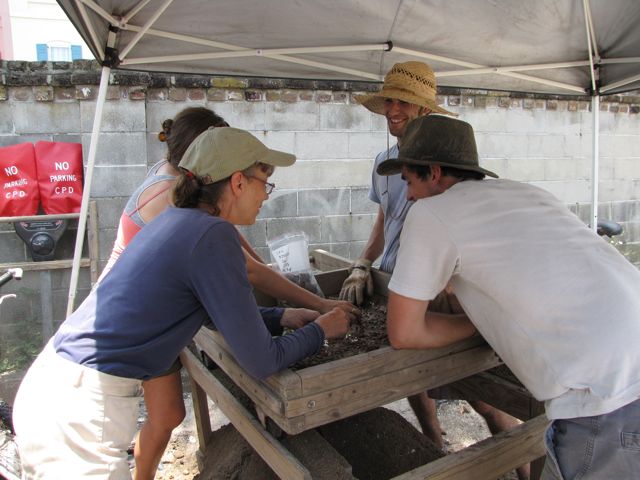
For the most part, today’s work focused on cleaning up the existing excavation units and taking formal photographs of the profiles of the earthen walls. The archaeologists spent a lot of time troweling and brushing the vertical faces of the units—from the surface to a depth of about five feet in the main unit—in order to clearly distinguish the many layers of sediment and fill. This kind of detail work is important for preserving a reliable record of the downward progression of the dig, which enables the archaeologists to establish reference points for dating the artifacts recovered from the soil.
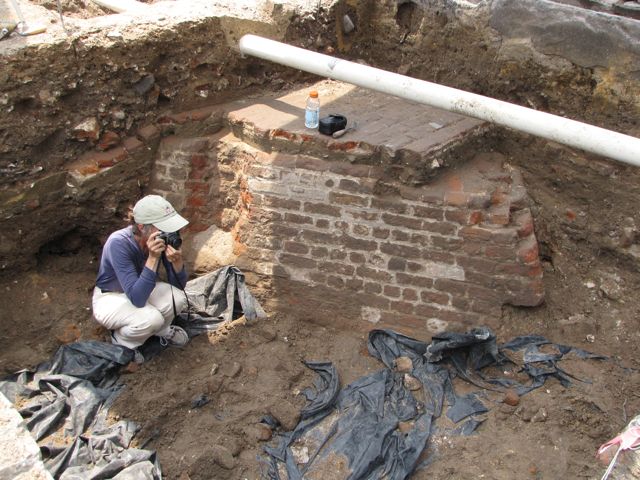
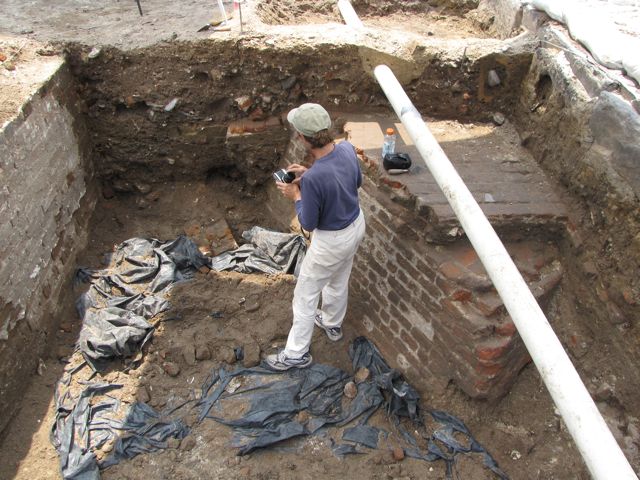
martha_shooting_profilesmartha_photographymartha_profiles

(click on the images of to enlarge)

Speaking of artifacts, the students screened less dirt today than usual, and the sort of artifacts they found were essentially more of the same—mid-eighteenth-century ceramics, glass, and pipe stems. Nothing especially photogenic came to light, so I have no interesting photographs to share today.
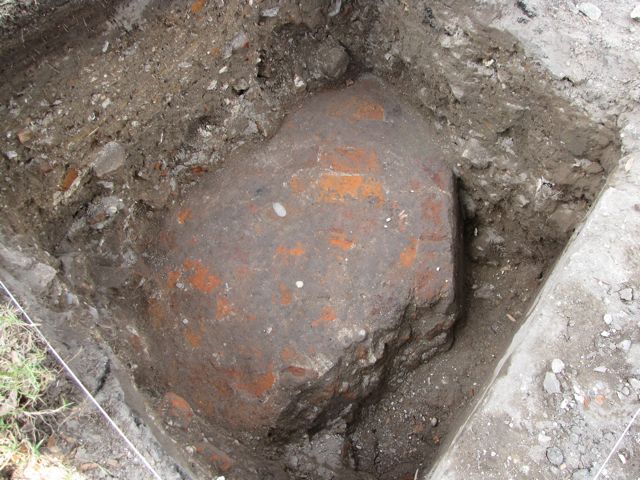
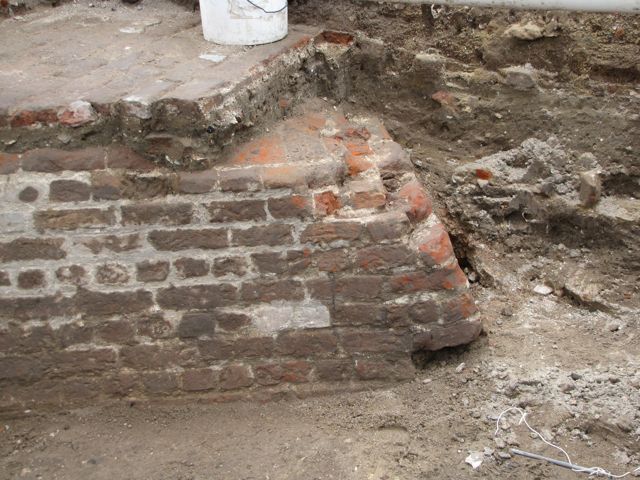
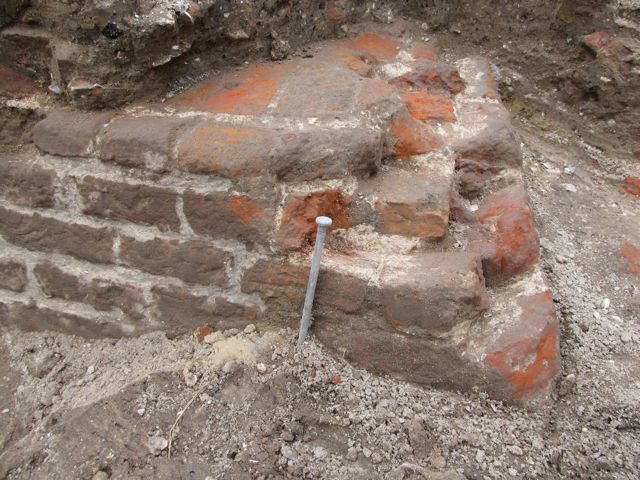
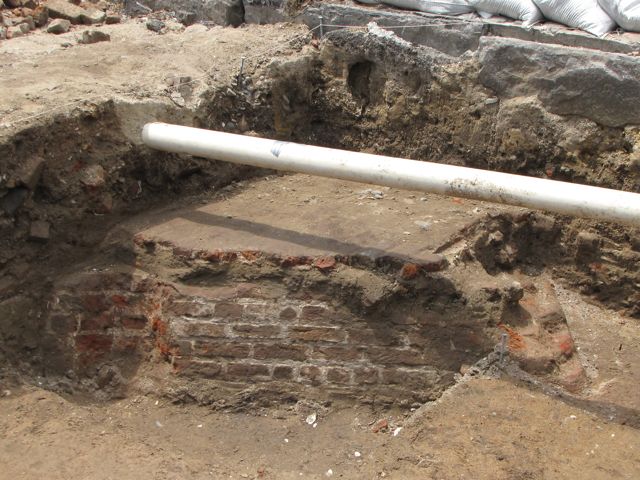
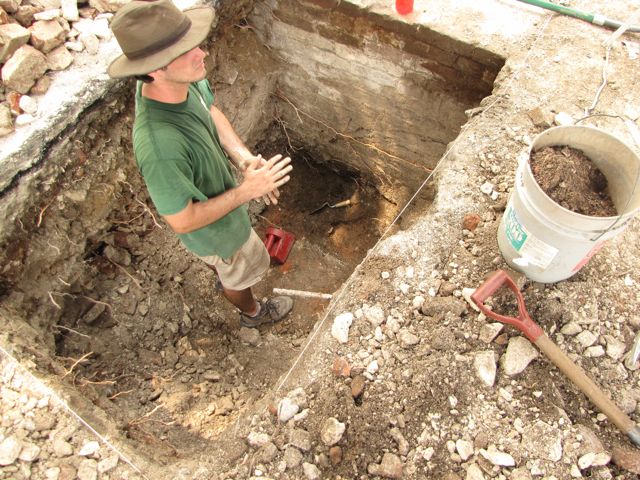
middle_unit_redanAs mentioned last week, the archaeologists have located another portion of the redan wall in a unit just a few feet southwest of that pictured above. We won’t be able to explore much of this portion, however, because it’s bounded on the north by utility conduits and to the south by the brick foundation of Vanderhorst’s North Row (see the photo to the left). Nevertheless, today brought new hope for finding further parts of the wall. Students digging in the westernmost unit, closest to East Bay Street, finally located part of the redan wall in that unit. west_unit_redanSince this unit is located on the south side of the brick foundation of the building known as Vanderhorst’s North Row, it appears that a significant portion of the upper parts of the redan wall were obliterated when that building was constructed ca. 1805. As a result, the student archaeologists had to dig to depth of about five feet just to locate the red-orange bricks signalling the top of the redan (see the photo at right). Thanks to their perseverance, we are now able to trace the line of the redan about twenty-odd feet southwestward from its apex. In the coming days, this westernmost unit will probably be expanded to allow a better view of this part of the wall. Better images yet to come!
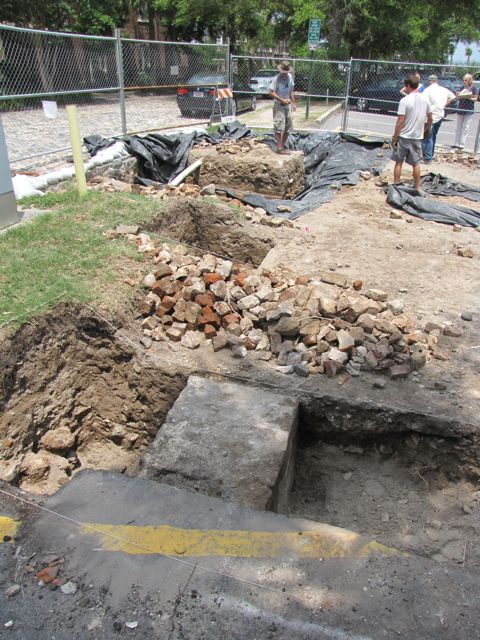
three_unitsThe College of Charleston archaeology students digging at the east end of Tradd Street (also known as South Adger’s Wharf) completed their second week of work today, and this dig is now half way to the finish line. In an effort to find the south wall of the redan, the archaeologists have so far opened the earth in three main areas as seen in the fore-, middle-, and background of the photo at the right. In the far left background of this image is the apex of the redan. The redan wall traverses diagonally through the open unit in the middle of this photo, and we had hoped to find its continuation in the open unit in the foreground. Because of the ca. 1805 brick foundation of Vanderhorst’s North Row, however, the redan has not yet been found in this western location. Perhaps next week we’ll have better luck.

Anthony_and_redanBack at our main point of interest, the area around the apex of the redan, the students removing the fill at the base of the colonial wall discovered a patch of bricks at a level that probably represent the 1760s. Those familiar with this project will know that when the redan was knocked down to street level at the end of the American Revolution, ca. 1784–85, the earth just east of the redan was strewn with bricks and brick fragments. mystery_bricksWe encountered plenty of that brick rubble at South Adger’s Wharf in 2008, and we’re finding plenty of it again this year. But the bricks unearthed today, just a foot or so southeast of the redan apex, appear to be large, intact bricks laid in a horizontal layer. Time did not permit a full investigation of this feature today, so it’s still a bit difficult to see this mystery brickwork clearly. Nevertheless, I’m including a photo of this feature at the right here for our curious readers.

small_bottleAnd of course the day’s work yielded some eyebrow-raising mid-eighteenth-century artifacts. For example, the students unearthed a small glass vial or bottle, perhaps once used to hold medicine or some other precious liquid. Compared to the quarter in the photo at left, you can see that it’s quite a diminutive piece. The students screening the dirt in front of the redan also found two small rectangular scale weights, which is a logical find considering that a market stood at this site as early as 1750. scale_weights_etcIn the photo to the right, you can see those weights in comparison to a recent U.S. quarter. At the top center of this photo is a fragment of a clay pipe stem, which in itself is not a rare find at all. Hundreds of pipe stem pieces have been found in this dirt, but this one has been stamped and colored with a brown geometric pattern. Finally, the small white “X” in this photo is a small fragment of a pierced ceramic serving dish dating from the middle of the eighteenth century. What was once a piece of fancy dinnerware became broken trash at some point, and made its way into the dirt in front of the waterfront fortifications of colonial Charleston.

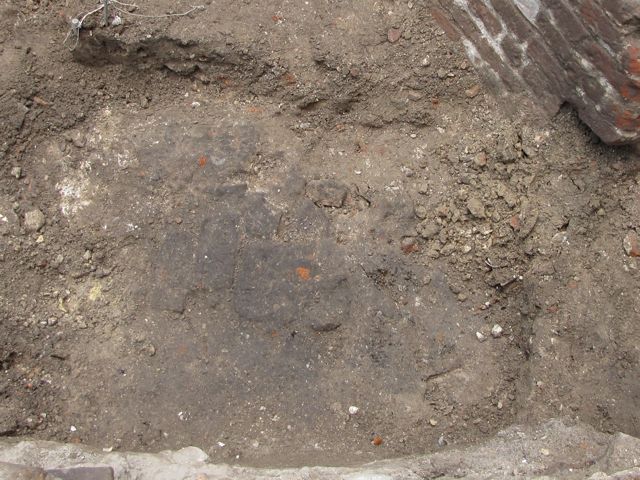
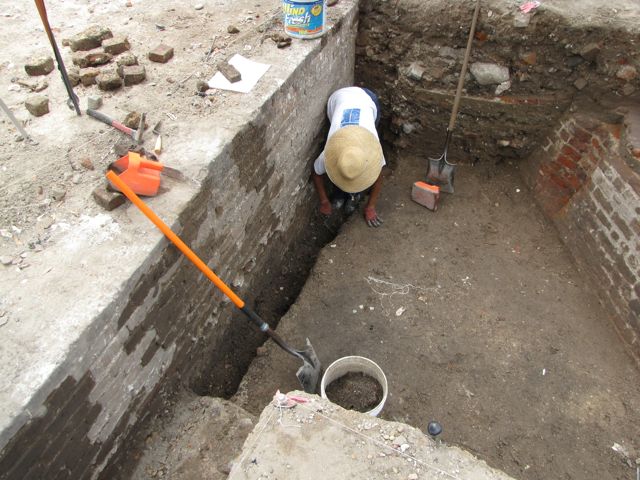
If you compare today’s photos with those of previous days, you’ll see that the archaeologists are slowly and methodically moving downward nearly a foot each day. They’ve really hit a stride now, and the view of the old fortifications will continue to improve throughout the course of the dig. With that in mind, I’m posting below the latest photo of the profile of the south side of the apex of the redan. In the center below is a photo of Lisa Randle working in the “builder’s trench” of Vanderhorst’s North Row—that is, the trench excavated ca. 1805 to lay the brick foundation of that building. Since that trench represents a different time period from the soil just a few inches to the north, every effort is being made to separate the artifacts from each area. Below right is a photo of a new unit opened today in an effort to follow the south wall of the redan as it continues to the southwest toward East Bay Street. As you can see in the center of the image, it appears that the red bricks of the redan are beginning to peek through the surface—minus the brick floor of the Lower Market that was seen in the units to the east.

redan_tip_Thursdaylisa_in_builders_trenchnew_unit_thursday

Eighteenth-century artifacts are spilling out of every shovelful of dirt removed from these units. Today I noticed a wheelbarrow full of dirt, ready for sifting, and was impressed by the range of materials just sitting on the surface. In the first photo below, notice the slip glazed redware in the center and top, surrounded by fragments of red brick, shell, and even a corroded iron fragment (on the left).

artifact_mixpipe_in_handpipe_on_orange

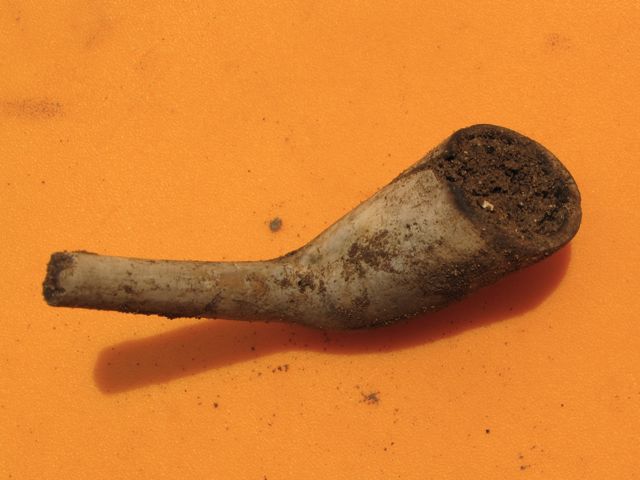
The last two photos depict a rare find—an intact clay pipe bowl. This one is more complete than that found last week, but it’s probably also of a different vintage. I did not find a maker’s mark on it, unfortunately. It was found in the builder’s trench next to the ca. 1805 wall of Vanderhorst’s North Row, so it was probably being used by a bricklayer employed in the construction of that early-nineteenth-century structure.

Now that the 1786 floor of the Lower Market has been almost entirely removed, the archaeologist are slowing digging into the layers of the the era of the American Revolution and the late colonial period. To our delight, they’re also finding a greater quantity of artifacts in this area than in the previous higher strata. Ron Anthony continued to carefully remove the floor of the excavated unit, passing the dirt on to Martha Zierden and the students at the screens. As a result of all their hard work, we have an slightly improved view of the apex of the redan. The complex angles of the redan brickwork are finally becoming visible, and over the next couple of weeks we’ll learn much more about the techniques of its construction.

redan_tipredan_apex_from_abovescreening_with_Martha

(click on the images above to enlarge)

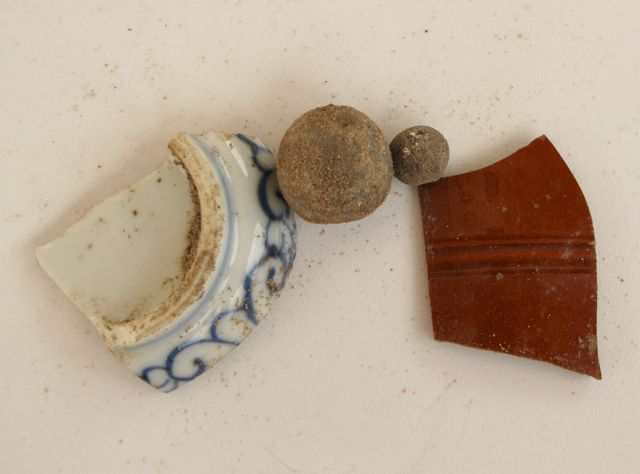
Many interesting artifacts turned up in today’s dirt, all dating from around the middle of the eighteenth century. I’ll just mention a few here. Around mid-day the students found an impressive fragment of a large German cooking vessel. As you can see in the photo below left, this piece represents part of the rim of the vessel, which, Martha tells me, would have looked like a large, shallow dutch oven with small feet. In the center photo below I’ve included two colorful examples of the bounty of ceramics found in today’s levels, along with two sizes of lead musket shot.

German_cooking_vesselartifacts_with_shotLaurens_bottle

(click on the images above to enlarge)

My favorite artifact of the day, however, is the bottle fragment pictured to the right above. If you look carefully, you can see that the emblem on this hand-blown glass fragment reads “Laurens.” Since this material was found in a layer of dirt representing ca. 1750 to ca. 1780, this bottle may have been created for the wealthy Charleston merchant Henry Laurens (1724–1792). In addition to being a South Carolina legislator, President of the Continental Congress, and the highest ranking American prisoner of war during the Revolution, Laurens amassed a fortune in Charleston through his active import-export business, trading with partners in Europe, Africa, West Indies, and throughout the American colonies. What a find!

I have three points to make about today’s progress at the east end of Tradd Street. First, the student archaeologist continued to carefully work their way down through the layers of sediment surrounding the remnants of the redan. As we found last year, there is an area of brick debris in the area immediately east of the remaining wall, representing the demolition of the upper levels of the wall ca. 1784–85. Amidst the area of rubble and earth just south of the redan the students also uncovered a large fragment of an eighteenth-century ceramic plate, probably royal creamware. I’m including two photos of the plate—one showing its physical context and a closer view.

redan_sideexcavating_unitroyal_creamware_plate

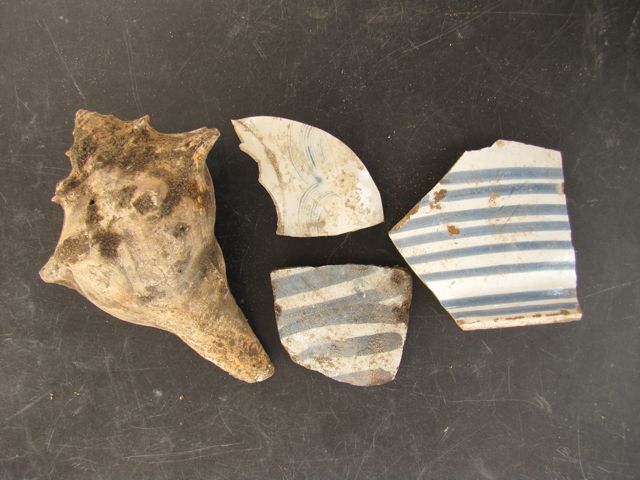
Tuesday_artifactsThis object brings me to today’s second point, that large number of ceramic, glass, tile, shell, and bone artifacts found at this site all represent kitchen-related activities. This fact seems perfectly in keeping with the presence of the Lower Market at the east end of Tradd Street between 1750 and 1800. There may be some people that are disappointed that we’re not finding buttons, buckles, coins, and other metal objects, but the archaeologists are very pleased with the consistency of the found materials.

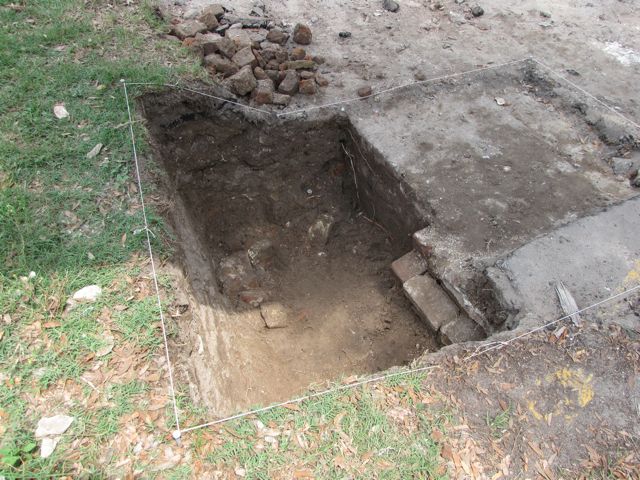
New_unitFinally, I’ll point out that the archaeologists opened a new unit at the western edge of the dig site. This was done for one principal reason—to determine whether or not the large foundation wall of the extinct building known as Vanderhorst’s North Row, which we located on the first day of this dig, extended westward through the rest of the site. Unfortunately for our purposes, the new unit revealed that the foundation does continue westward, and thus its construction ca. 1805 probably obliterated part of the southwestern wall of the old redan. At least now we know!