South Adger’s Wharf


In a dramatic contrast to the frigid weather conditions experienced last week, everyone working at the South Adger’s Wharf dig today found themselves shedding layers of clothing and reaching for the sunscreen. The warm temperatures and bright sun helped create an energetic work site, and progress was made in three main areas today.
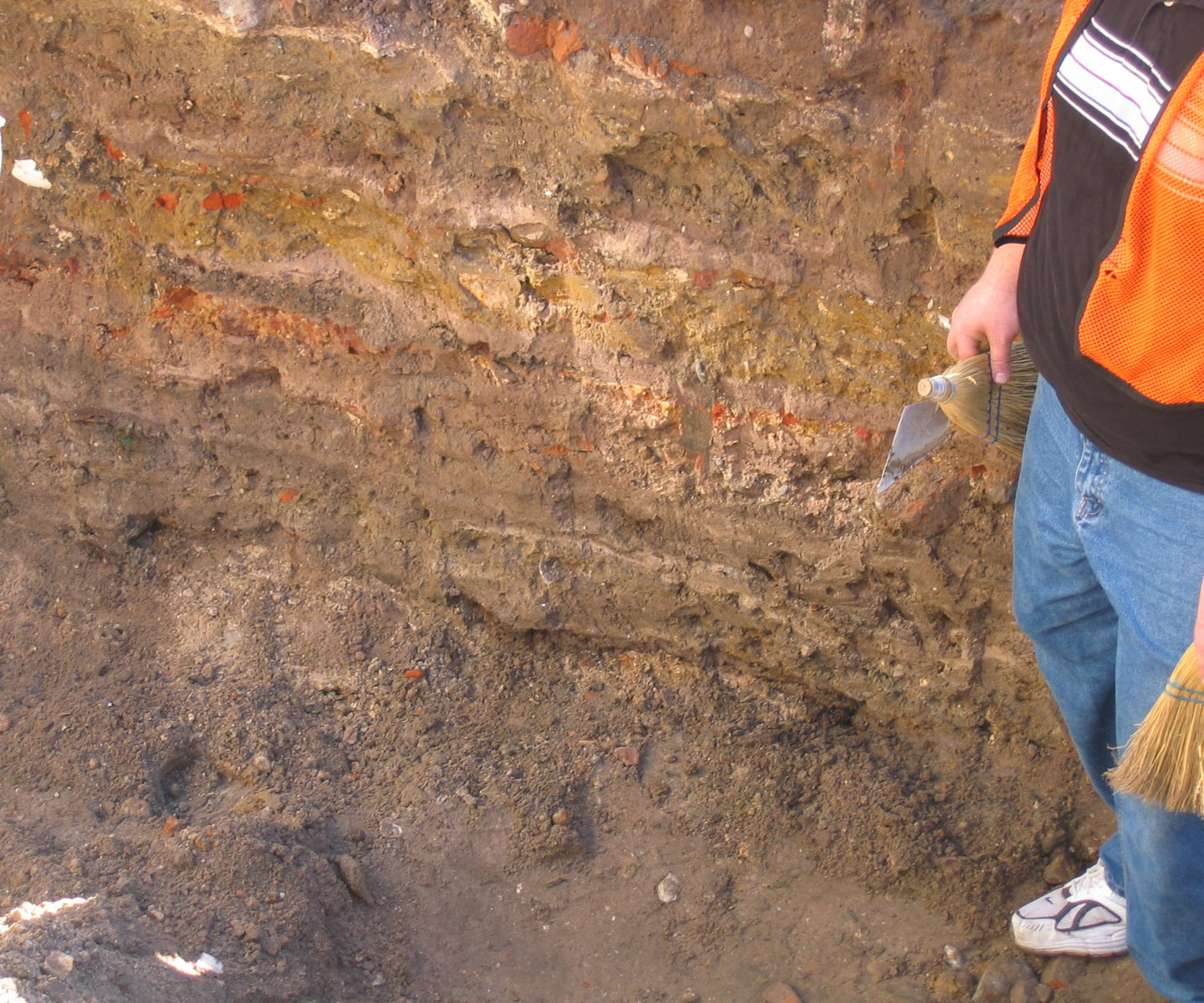
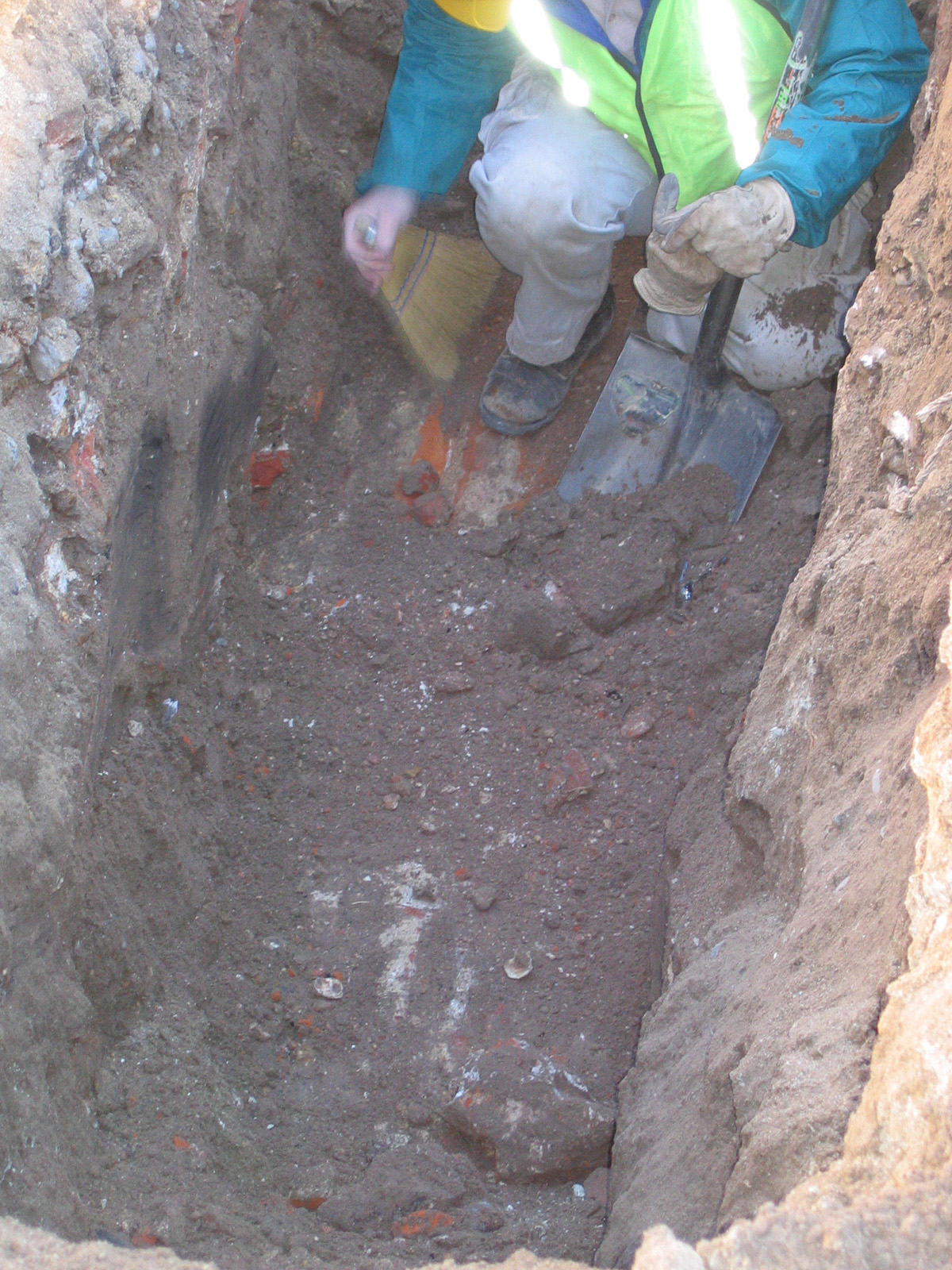
trench_1_layers.jpg zierden_trench_1.jpgFirst, archaeologists Martha Zierden and Ron Anthony from the Charleston Museum, joined by and Andrew Agha from Brockington and Associates, used hand trowels to clean up the east face of the initial trench created on Thursday, January 3d, in order to examine and document the many visible layers. Understanding the various colors and textures of these layers is crucial, and with further study they will help the archaeologists to identify and date the many episodes of fill that created the modern street bed.
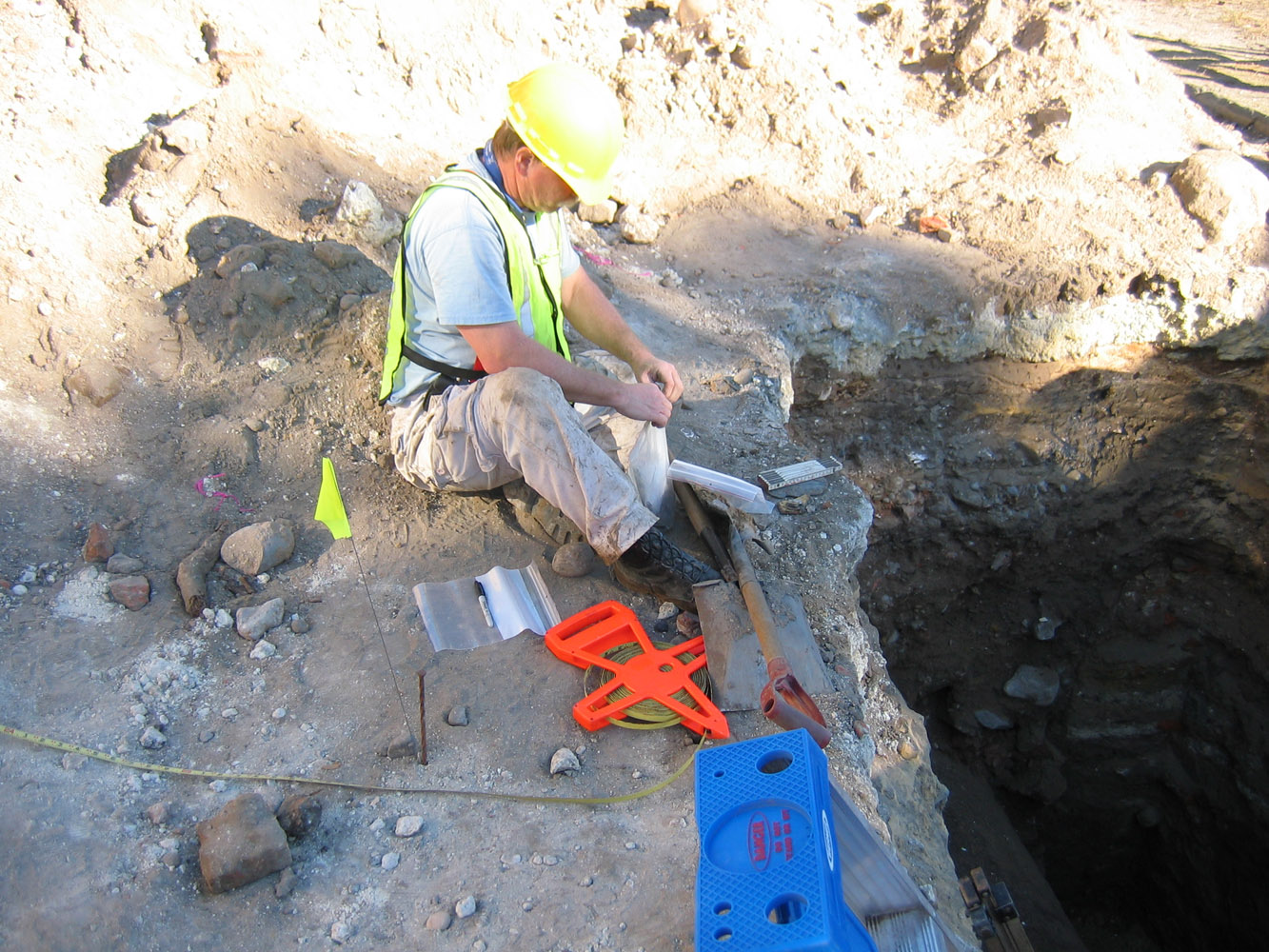
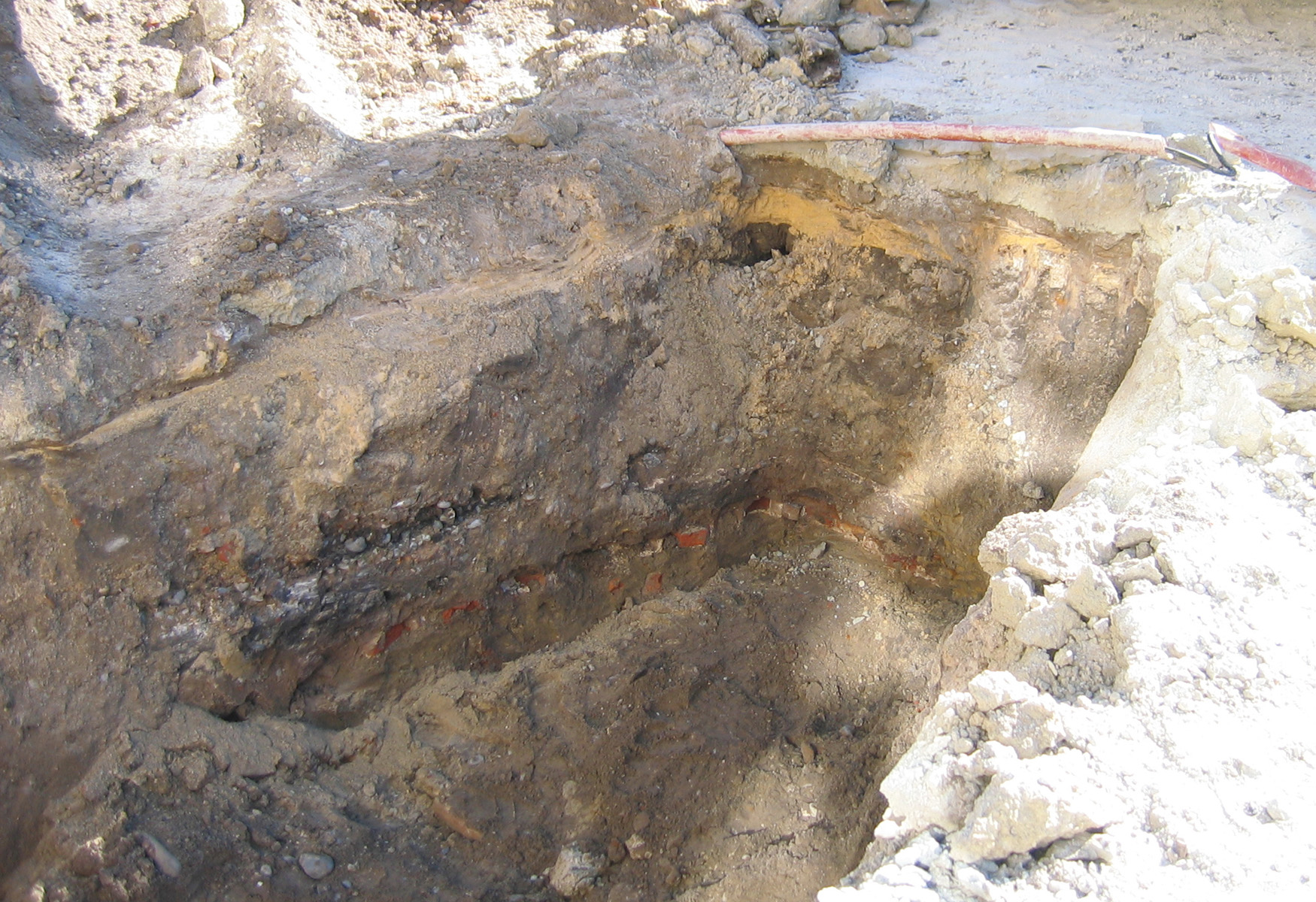
poplin_bagging_artifacts.jpg brick_drain.jpg Second, archaeologist Eric Poplin troweled the east end of the second trench in order to study a rubble pit that is probably associated with the demolition of the “Lower Market” in 1800. In addition, Eric has been exploring the outline of a deeply-buried arched brick drain that runs east-west through the site, and may date back to the colonial period. The massive brick remnants of the redan, uncovered last Friday at the west end of this trench, will have to wait another day for further close inspection.
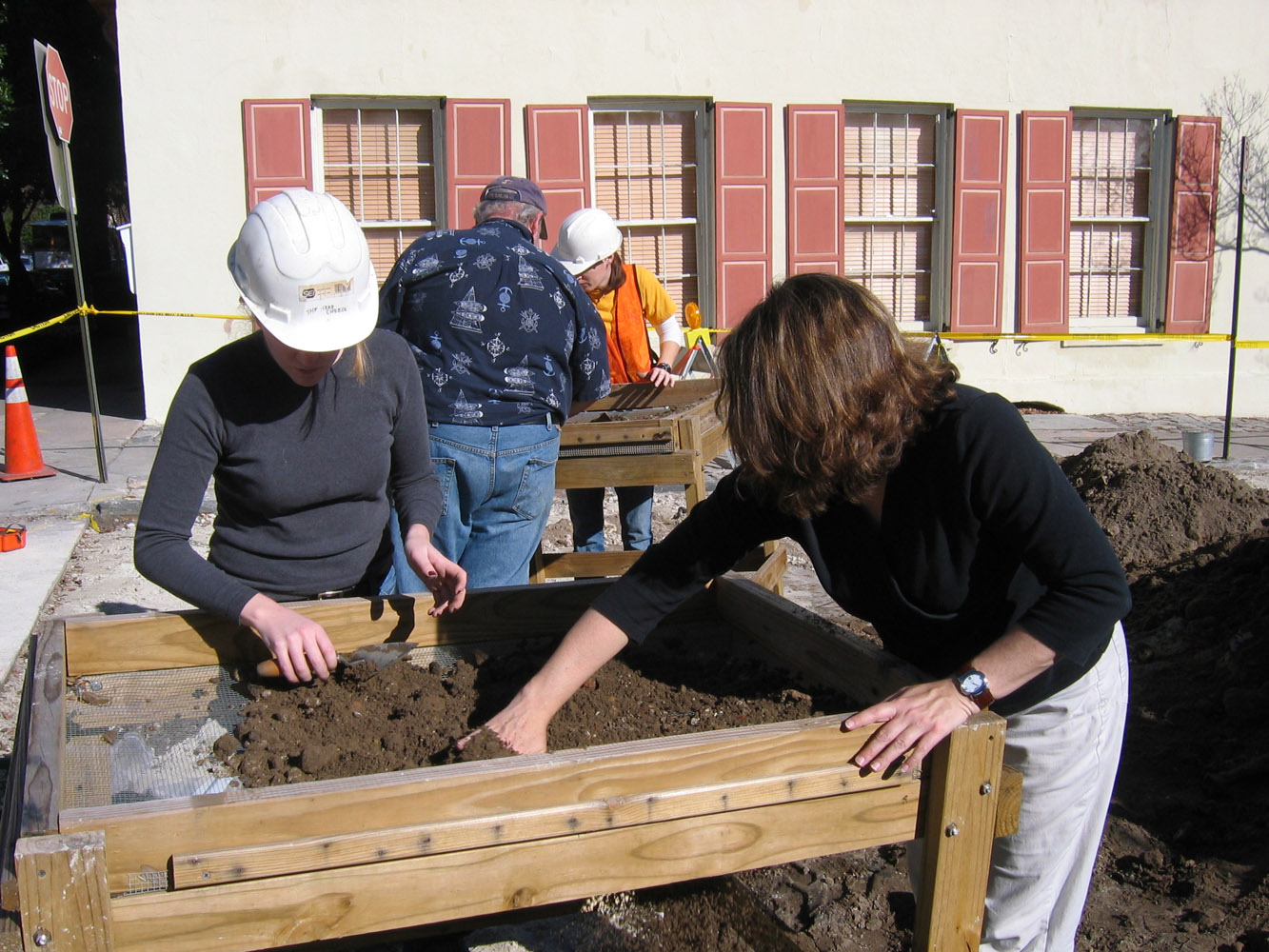
screening_for_artifacts.jpgThird, a number of volunteers began screening excavated dirt for artifacts. A number of ceramic and glass fragments have been found so far, representing a wide variety of forms, types, and eras. Considering that part of this site was once used as a market, it is no surprise that a number of animal bones and oyster shells have been uncovered as well. My personal favorite artifacts found so far is a pair of old leather shoes—found separately—that some old soul may have lost in the pluff mud three hundred years ago!

Further hand trowelwork and screening will continue tomorrow. On the surface it may seem that little progress was made today, but Martha Zierden remarked that she felt like the archaeological team had made substantial headway in understanding what has been uncovered so far.
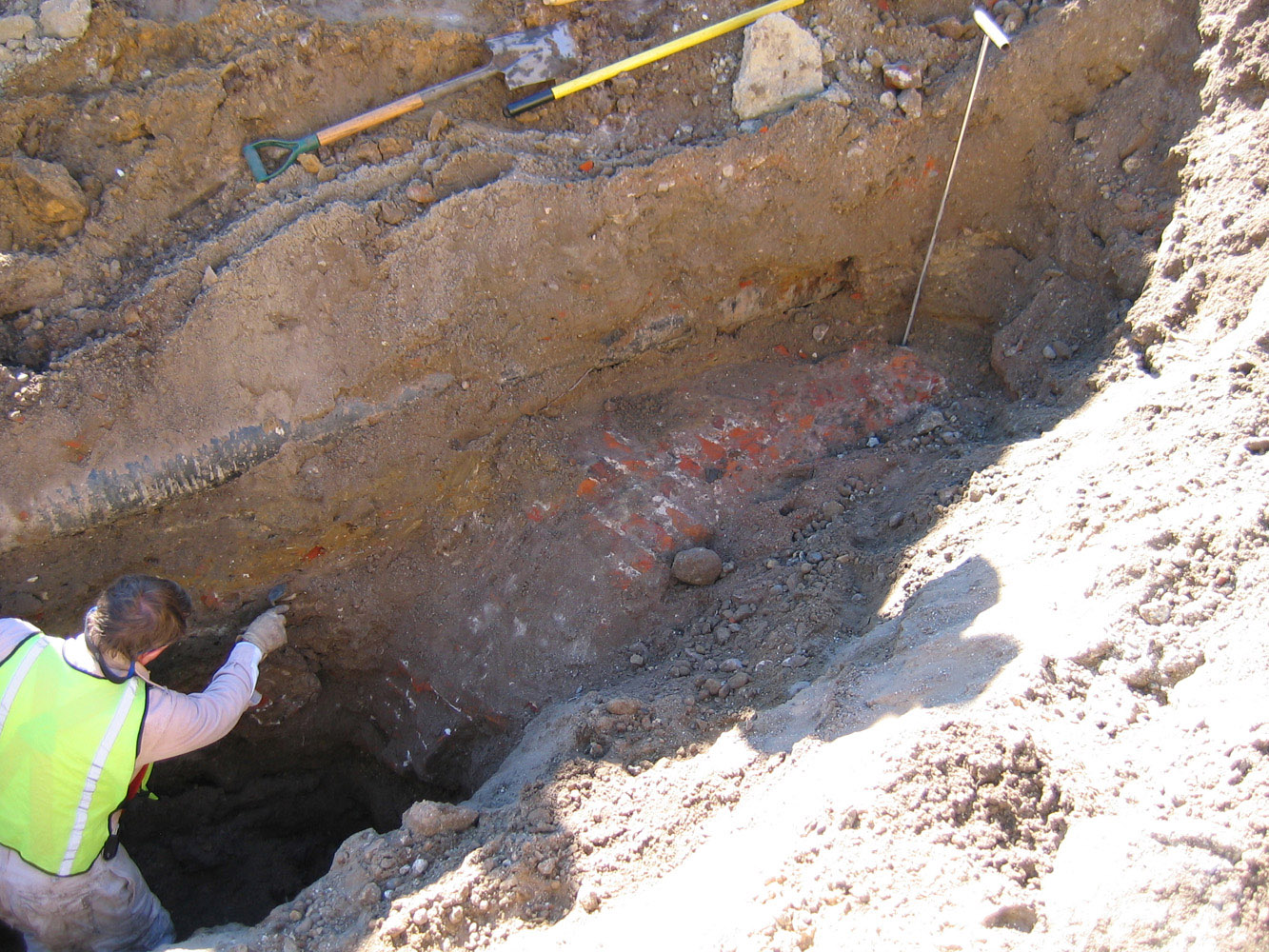
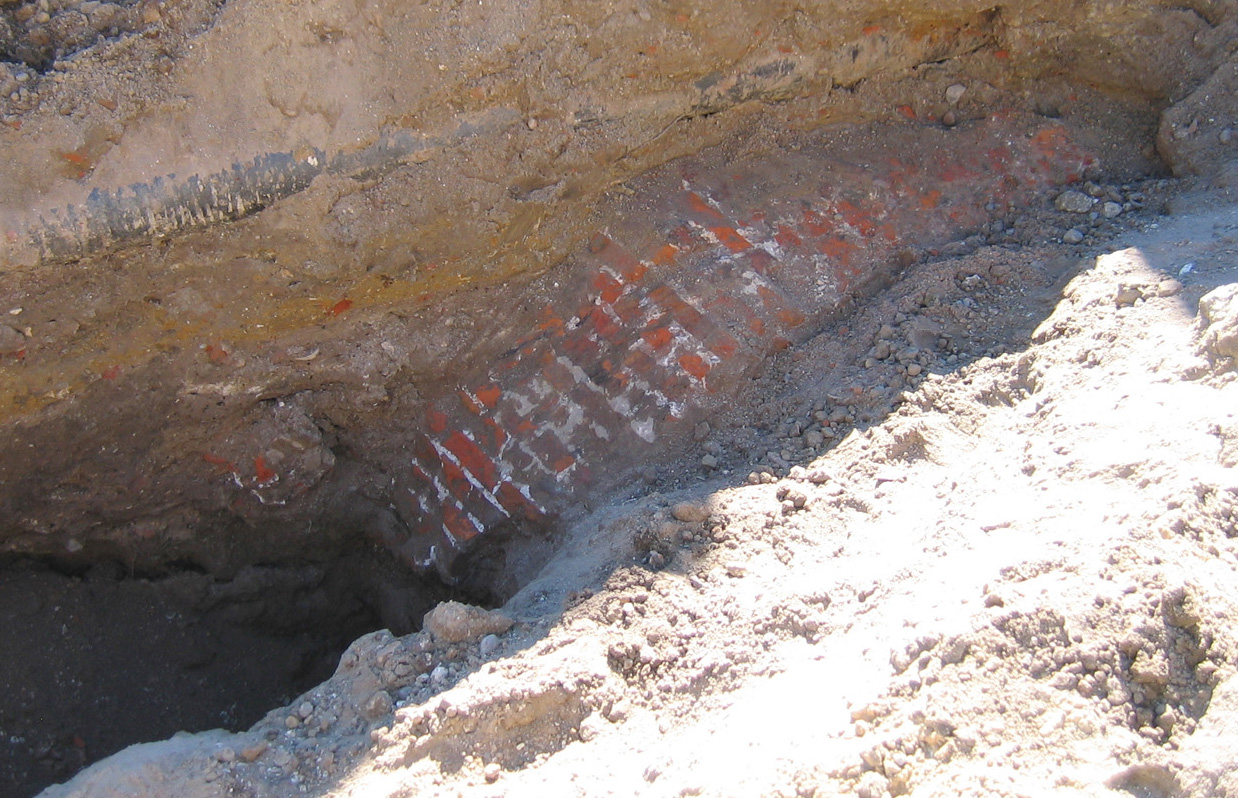
poplin_and_redan.jpgThe second day of archaeology at South Adger’s Wharf started with a frosty chill, but the cool weather didn’t dampen the anticipation and excitement in the air. The second trench, opened on Thursday afternoon, was widened and lengthened in the hopes of encountering some remnants of the brick redan that was started in 1696 and demolished in 1785. At approximately 11:45 a.m., an excited cheer rang out from the site, signaling that something truly interesting had been found. After seeing large numbers of paving bricks from the nineteenth century yesterday, the crew uncovered a large mass of bricks and mortar that appeared to be part of something much more substantial.

redan_fragment_01.jpgMembers of the Mayor’s Walled City Task Force all agreed that this brick mass was likely part of the south flank of the salient angle or redan that projected outward from colonial Charleston’s eastern curtain line, but there are still several lingering questions about its precise identity. The location of this brick mass, which is laid in English bond, seems to match that indicated by eighteenth-century plats of the site, but none of the visible surfaces appear to represent an original finished face or exterior surface. The demolition of the redan in 1785 undoubtedly left scars on the surviving remnants, and there is ample brick rubble surrounding this feature to emphasize that point. On Monday we’ll have a chance to explore the area around (and below) this mass of bricks, the 1696 foundation of which should be especially interesting. Hopefully by Tuesday we’ll have a more confident opinion exactly what we’ve found. redan_fragment_02.jpg

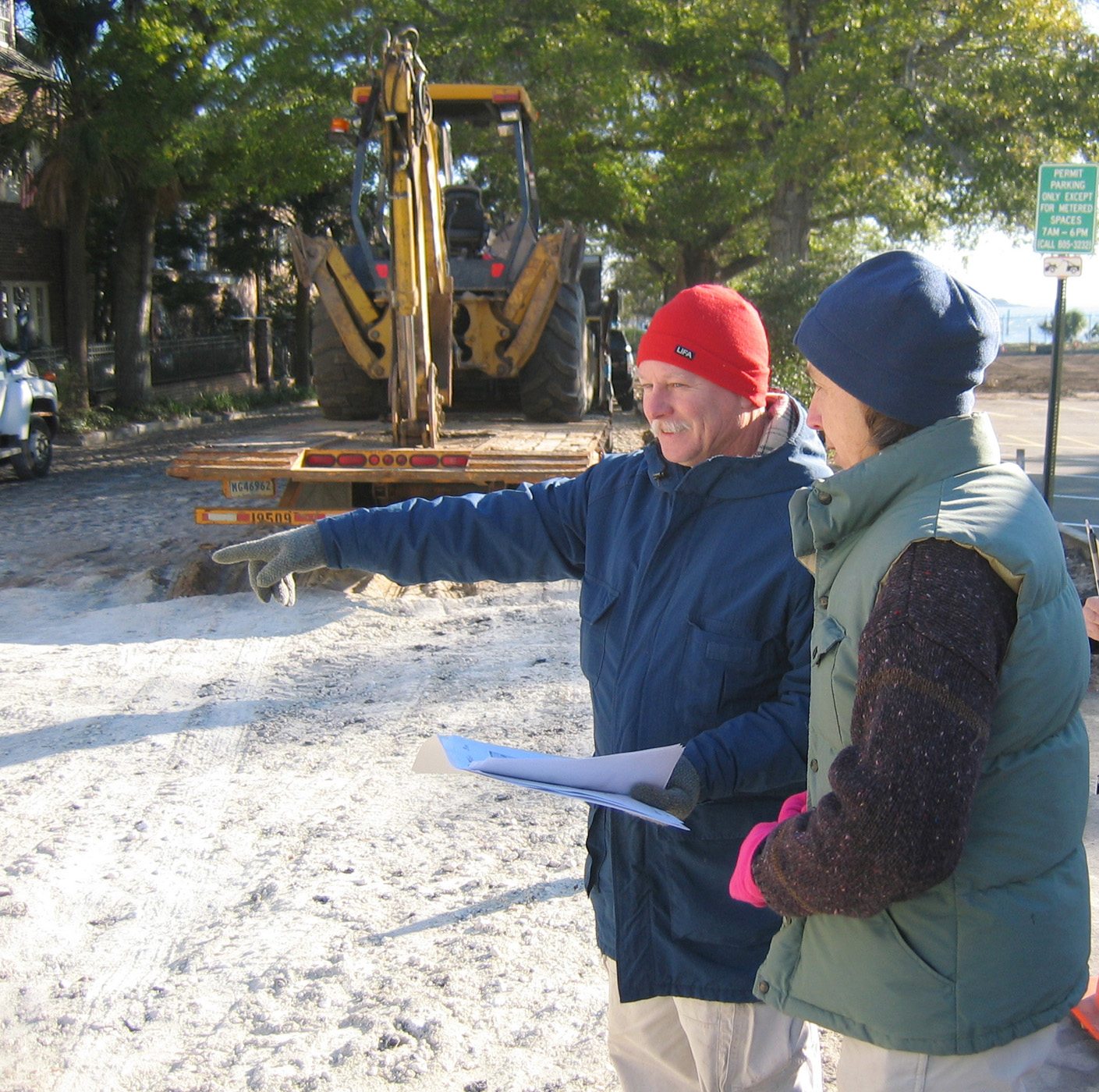
poplin-__zierden.jpg Members of the Mayor’s Walled City Task Force gathered at South Adger’s Wharf (SAW) this morning at 9 a.m. for a chilly start of the long-anticipated archaeological dig. Under the direction of archaeologists Eric Poplin (of Brockington & Associates) and Martha Zierden (of the Charleston Museum), the well-skilled backhoe operators from Charleston Water System initiated the dig with a narrow north-south trench from the northern edge of the site. old_street_surface.jpgA consistent layer of brick rubble and stones was found soon within the first few feet, but after closer inspection these materials proved to be the remnants of an older street surface that permeates the site. The digging continued, and by noon the trench had been widened to the west and lengthened southward without encountering any exciting features.

trench_02.jpg After lunch, the team decided to initiate a second trench, perpendicular to and south of the first. Several feet down the new trench revealed the slightly-arched top of a brick drain running east-west, the age of which is not yet clear. trench_2_drain.jpgAt the east end of this drain appeared to be a mass of bricks unlike anything else yet encountered. Could this perhaps be part of the foundations of the brick redan constructed on this site more than three hundred years ago? Unfortunately, the clock had expired for the day. The answer to this tantalizing question will have to wait until tomorrow.

south_adgers_wharf_004a.jpgThe long-anticipated archaeological dig at South Adger’s Wharf in downtown Charleston will commence early Thursday, the 3rd of January, 2008. Temperatures will be uncomfortably low for many Charlestonians, perhaps hovering around the freezing point, but the work must go forward in order to keep pace with the city’s schedule for completing the utility work at this site.

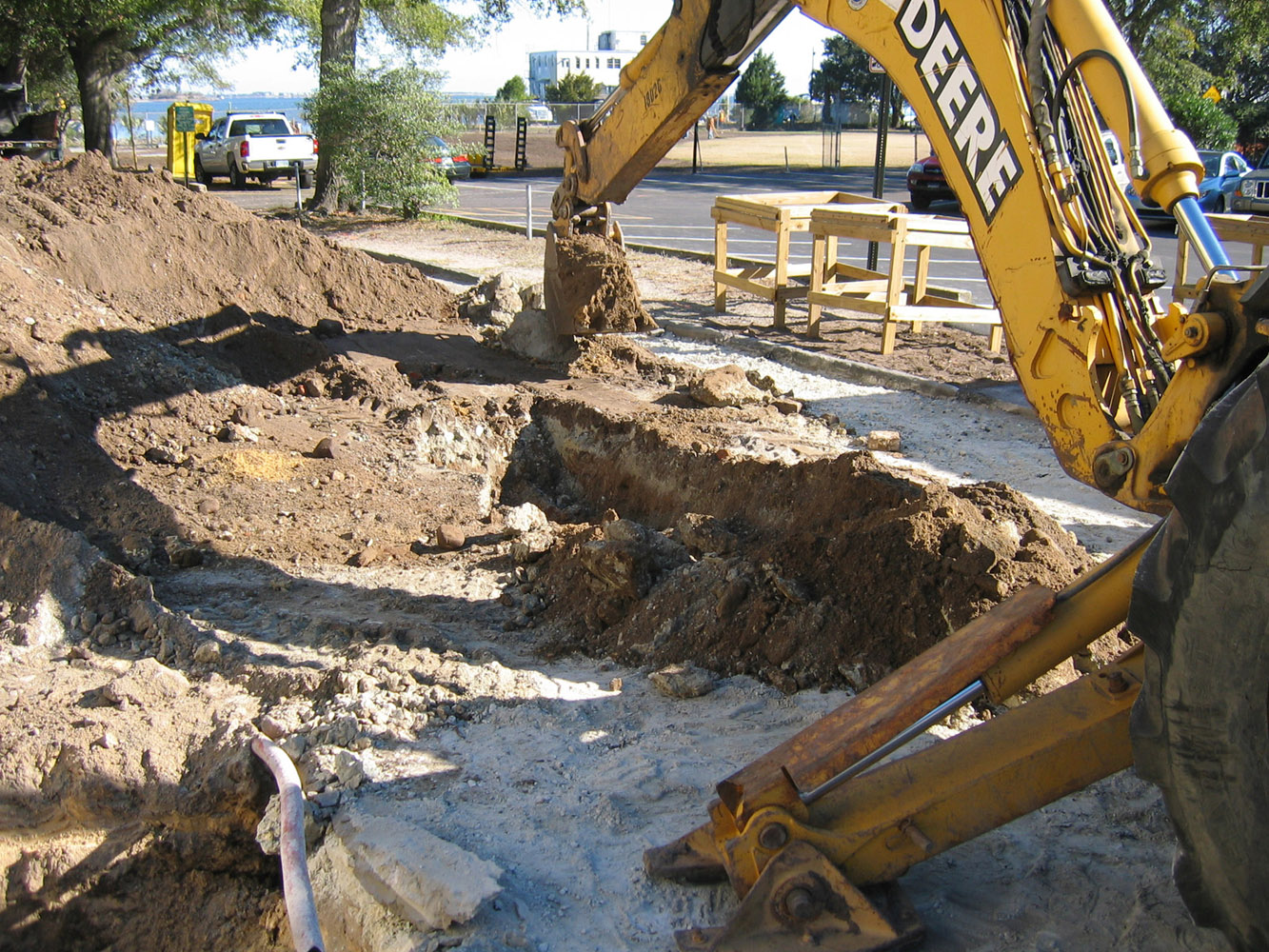
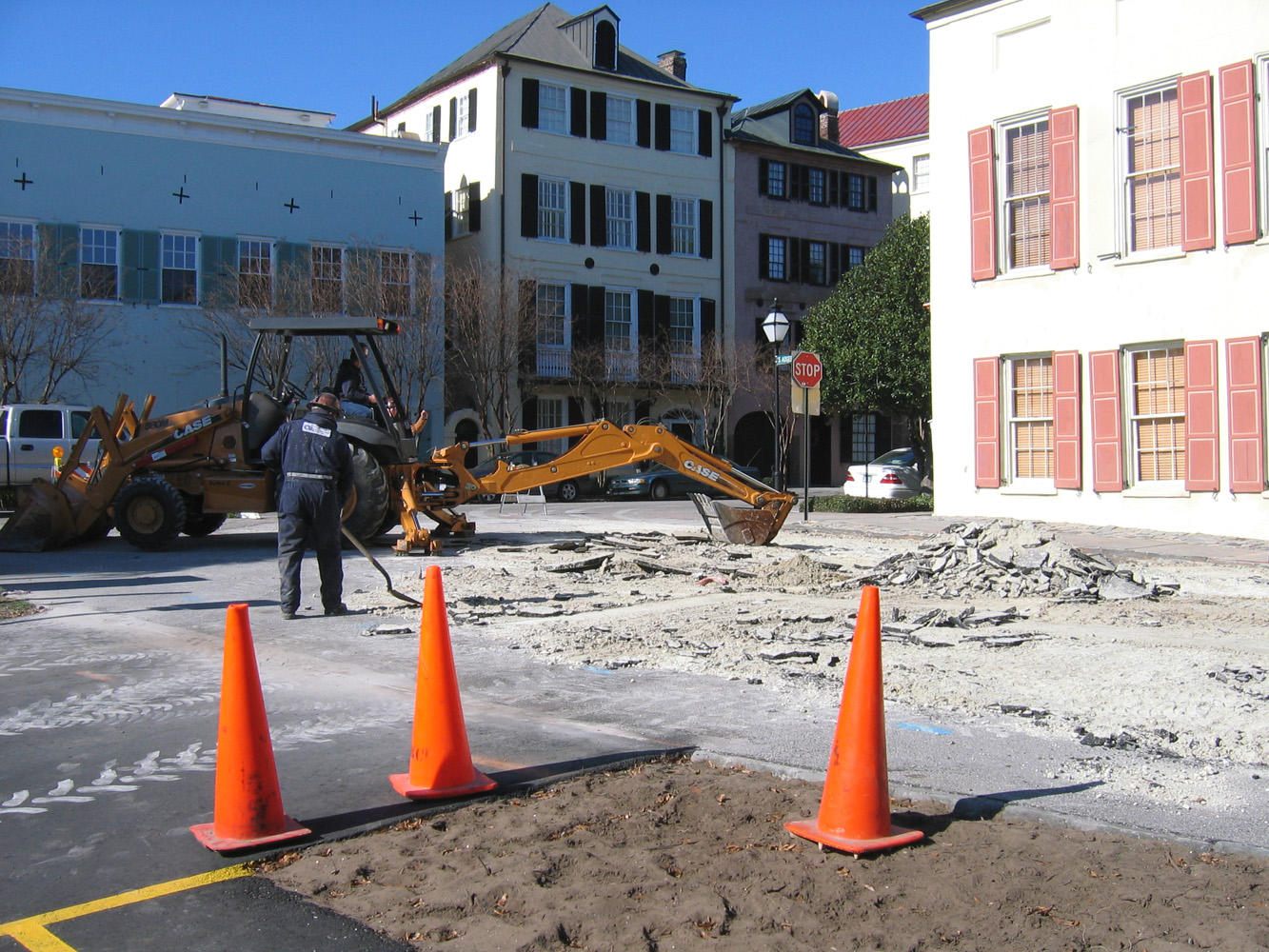
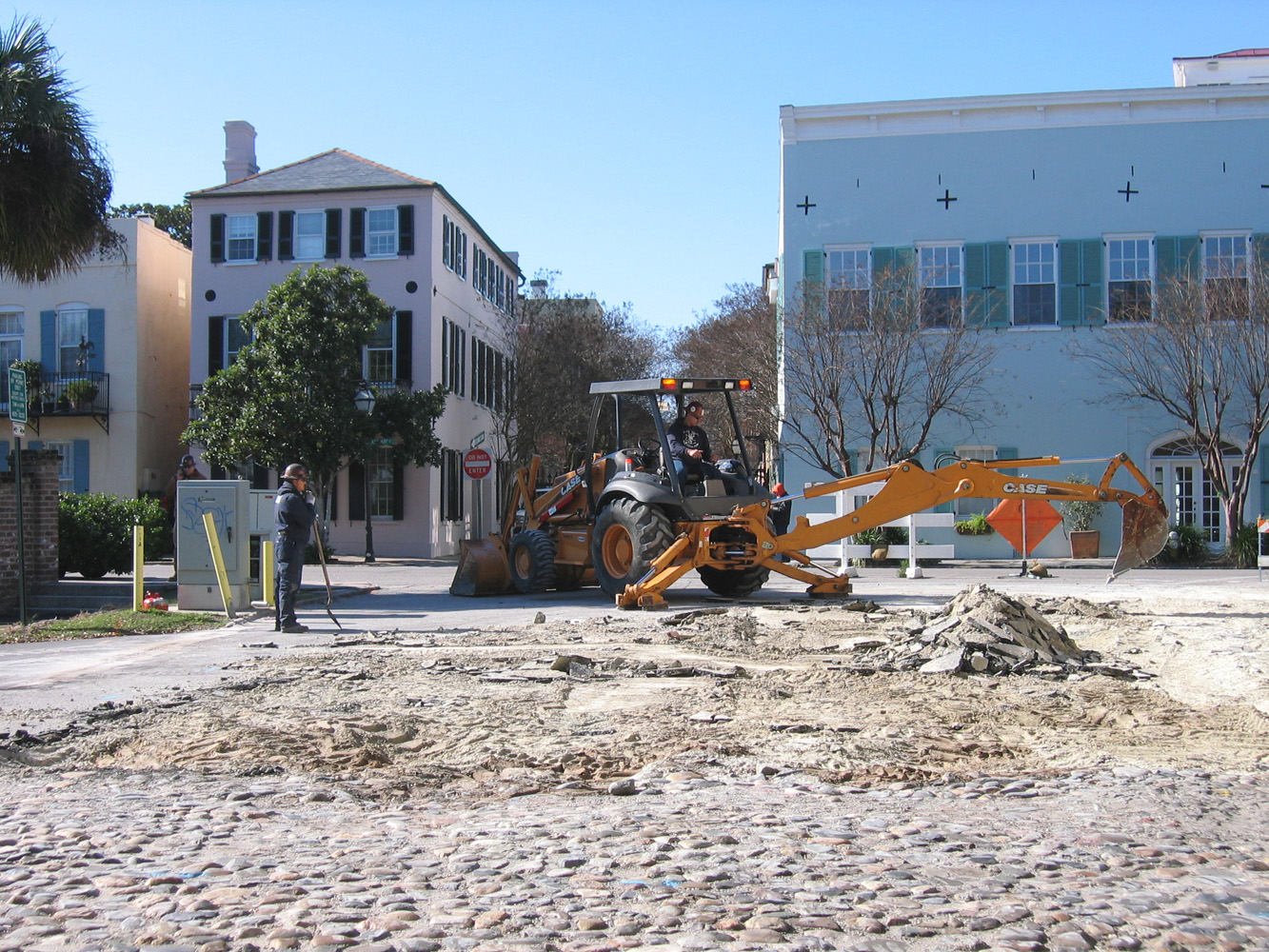
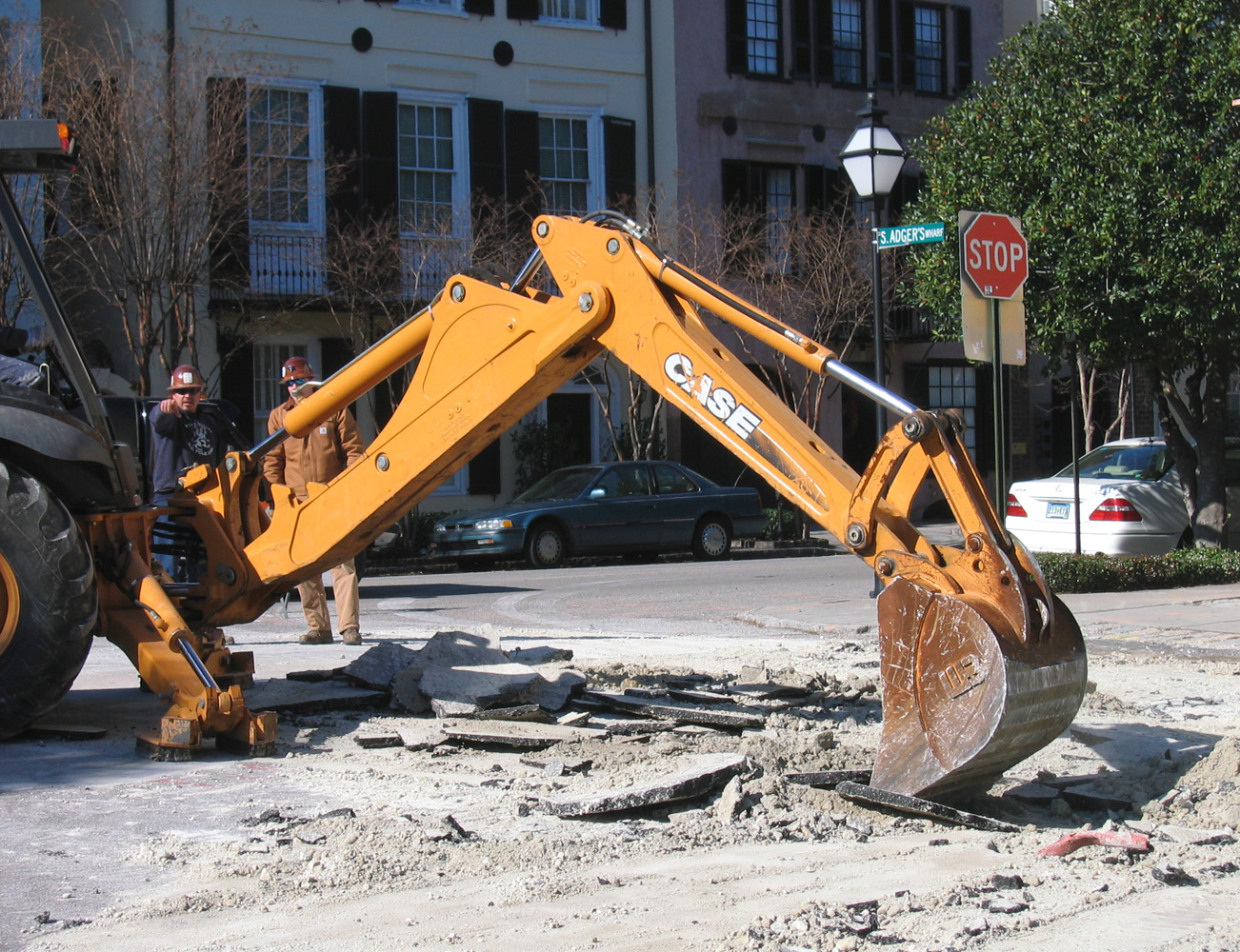
south_adgers_wharf_002a.jpg For those of you who didn’t happen to witness the activity at the dig site today, a work crew used a backhoe to remove the temporary blacktop from the west end of South Adger’s Wharf. The exposed site, measuring approximately fifty feet square, is now plain dirt, but by the end of January it will be restored to its former state as a cobblestone lane.

south_adgers_wharf_005a.jpg Over the next two weeks, archaeologists will explore the site with the hopes of finding evidence of various features from Charleston’s colonial past. The dig will commence on Thursday morning with a trench running north-south through the site, hopefully encountering the foundations of the three-hundred year old brick redan that once dominated the site.

south_adgers_wharf_003a.jpg

The upcoming archaeological investigations now scheduled for early January (2008) are intended to uncover some important components of the eighteenth century Walled City of Charles Town. We are hopeful that we can locate, map, and study the remains of the redan and the lower market that were located on the site. Here’s a sneak peek at what we’re looking for.

Tradd St Redan, 1739

The Redan
This small structure, known as a redan, was part of the main line of colonial fortifications that faced Charleston Harbor. This line of brick fortifications was begun along the east side of the Bay Street in the 1690s. Based on European fortification design principles of the day, the angled walls of the redan allowed the five or six cannon mounted within to fire at a wider range of potential targets, and thus better protect the curtain wall and the city from naval assault. When it was built three hundred year ago, the Cooper River washed the redan’s brick walls at high tide. Since that time, the mud flats on the east side of East Bay Street have been built up with silt, ballast stones, trash, and other materials.By 1784 or 1785, when the redan at the east end of Tradd Street was finally removed, an extensive wharf stood between it and the channel of the Cooper River. This extension of Tradd Street is now known as South Adger’s Wharf.

The Lower Market, 1751-1799
A major fire in November 1740, which burned nearly half of Charleston, destroyed the Exchange and Court Room that had recently been built at the east end of Tradd Street. The site sat vacant for several years, except for the presence of the brick redan at the foot of Tradd Street. In 1750 the S.C. legislature approved the building of a new market on a growing wharf on the east side of the brick redan, and construction continued into 1751. From the 1750s onward, the structure was known as the “Lower Market,” to differentiate it from the Beef Market (the site of present City Hall), and provisions of all kinds were sold here, but not slaves. According to a resolution of Charleston City Council in late 1785, after the old brick redan was finally removed, the Lower Market was enlarged, however, it was still too small to accommodate Charleston’s growing market needs, and the site was becoming too congested by the post-Revolutionary expansion of the wharves. In an effort to consolidate the city’s market activities in the new Market Street, this market was closed in 1799, and the city sold the property in early 1800.

« Previous PageNext Page »