programs


Granvill's Bastion in 1739

Granville’s Bastion as it appeared in 1739

Commissioned in 1696 and dismantled in 1785, Granville’s Bastion was Charleston’s first brick “fortress” and the principal defensive work along the Cooper River waterfront. Here twelve cannon guarded the southeast corner of the town, overlooking a small beach where royal governors and visiting dignitaries were received with pomp and ceremony. Only its foundations remain today, under the present Missroon House, but the surviving materials provide sufficient clues to facilitate a conjectural reconstruction. Please join historian Nic Butler on November 28th for an illustrated review of the history of Granville’s Bastion, and learn how new technology can be used to render a 3D model of this once-formidable structure.

Granville’s Bastion: Charleston’s First Brick Fortress

Place: Charleston County Public Library, 2nd Floor Classroom

Time: Wednesday, November 28th 2012, at 6:30 p.m.

From the late 1690s to the mid-1780s, Charleston’s waterfront along the Cooper River was protected by a substantial brick “wharf wall” or “curtain line,” stretching nearly 2,600 feet in length. That wall formed the front line of the town’s defenses, and stood longer than any other part of our colonial-era fortifications. After being continuously repaired and partially rebuilt on several occasions during the early eighteenth century, the brick “wharf wall” was razed to street level in the mid-1780s after the conclusion of the American Revolutionary War. Remnants of the foundation of this wall still exist along the length of East Bay Street, from the Missroon House to the U.S. Custom House, but little information has yet been gathered about its width, height, and precise location.

As part of its mission, the Mayor’s Walled City Task Force is endeavoring to correct these factual shortcomings. Recent archaeology and documentary research is now giving us a better understanding of the old “wharf wall.” The public is invited to learn more about this topic by attending a free lecture, hosted by Dr. Nic Butler, entitled

“Charleston’s ‘Wharf Wall’: Front Line of our Colonial Defenses.”

Time: Wednesday, October 24th 2012, at 6:30 p.m.

Place: Charleston County Public Library, 2nd Floor Classroom

Yesterday I neglected to thank Robert Behre, columnist with the Charleston Post and Courier, for his good article (and video) of the “buried treasure” that has been uncovered at the east end of Tradd Street this month. Over the past several weeks his three articles about this dig have definitely enhanced our visibility, and we appreciate the public attention given to this educational venture.

thousands_of_artifacts

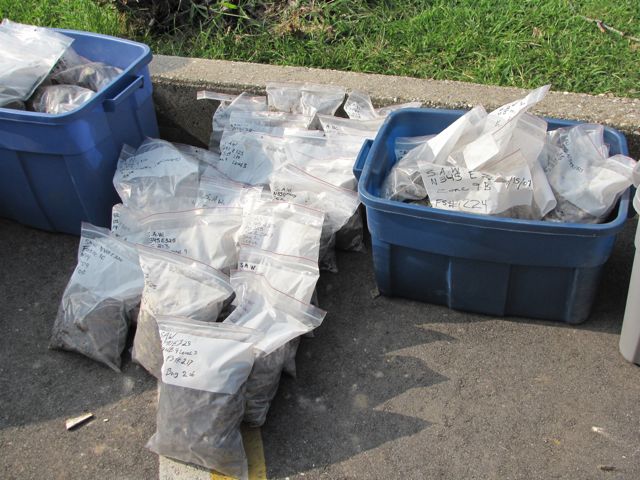
Bags of artifacts ready for the lab at the Charleston Museum

Since the digging finished yesterday, the dozen College of Charleston archaeology students helped Martha Zierden of the Charleston Museum to sort the labeled bags of artifacts accumulated during the past four weeks. Martha says the total number of ceramic sherds, bottle fragments, bone, and other items is still unclear, but it’s definitely in the thousands. A few double glazed windows in perfect condition were retrieved, it’s clear however that many windows did not get so lucky. The task of processing and preserving this material begins now and will continue for many months. This long and laborious project costs money, too, so we ask everyone to please consider donating to the Walled City Task Force or directly to the Charleston Museum in order to help Martha with this important work.
striking_the_set

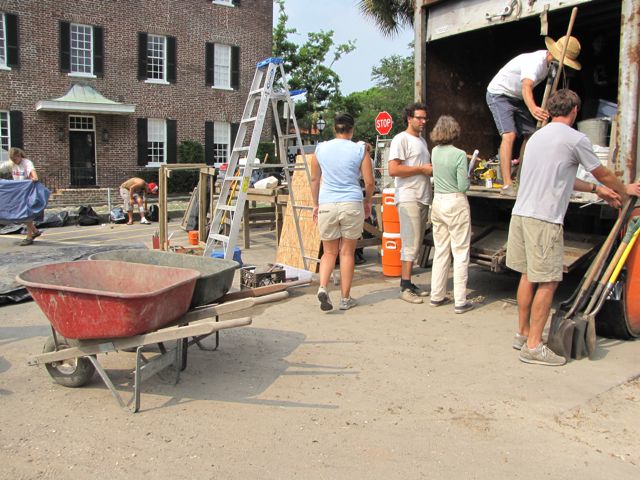
Striking the set on on the final day of the dig

This plan for this dig was hatched by the Mayor’s Walled City Task Force many, many months ago, but it was conducted this month as a “field school” course through the College of Charleston. The students laboring here in the sun and rain over the past four weeks  are receiving course credit for their work, and this morning they had their final exam. Following that somber ritual, the students and and their course leaders, Martha Zierden and Barbara Borg, gathered all the tools, equipment, supplies, and artifacts and began packing up the Museum’s old field truck. Like the end a theatrical run, the actors on this archaeological stage pitched in to strike the set and say a bittersweet goodbye to the experience.

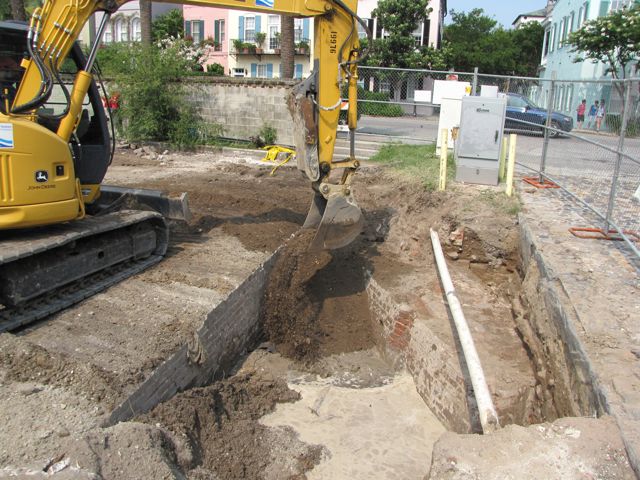
The only task remaining was to re-cover the redan that they have worked so hard to unearth. Compared to the past four weeks of painstaking, meticulous digging and study, the process of filling the excavation units went by in the blink of an eye. For this task we turned over the stage to two familiar faces, James “Tiny” Bonnett and Leroy Young of Charleston Water System, who so ably assisted us with heavy equipment in January 2008 and again this week. Leroy brought in fresh fill dirt to cover the redan, and James gingerly directed the backhoe to move the dirt into position and tamped it down. Below are a few photos of this “finale.”

dirt_fillcovering_the_redandig_site_looking_south

The fence and signage at the dig site will remain for a few more days, and next week the city will repave the portion of asphalt parking lot disturbed by this project.

Many visitors to the dig site have expressed dismay that we planned to fill the excavation at the end of June. Exposed to the elements, especially direct sunlight, however, the old brick and wood that we’ve been studying would rapidly begin to decay and crumble. It’s in everyone’s best interest to protect this historic site, and re-covering it offers the best short-term solution. Until such time as there is a plan for a safe and secure method of displaying or viewing the remnants of the old redan, we’ll just let it rest. Once a plan has been designed and approved, then the money must be secured to bring the plan to fruition. In the near future we’ll definitely be beating the drum to raise funds for this purpose, and we hope members of the community will express their enthusiasm for creating a window into the past by lending a hand. If you feel inclined to assist in funding such a project I encourage you to contact Katherine Saunders, co-chair of the Mayor’s Walled City Task Force and associate director of preservation at the Historic Charleston Foundation.

Don’t forget about the upcoming program at the Charleston County Public Library on Tuesday, June 30th, at 6:30 p.m. We’ll review the past four weeks of archaeology and talk about all the lessons learned during this great experience. Please come!

The name “Fort Johnson” is familiar to nearly every resident of the Charleston area, especially those on James Island who live on or near the scenic Fort Johnson Road. Hundreds of people work and study every day at the NOAA’s Hollings Marine Laboratory and Center for Coastal Environmental Health and Biomolecular Research, the College of Charleston’s Grice Marine Laboratory, MUSC’s Marine Biomedecine and Environmental Sciences Center, and SCDNR’s Marine Resources Research Institute, all of which are located on the grounds of Fort Johnson. But how many people know anything about the history of the old fort itself, which was dismantled more than a century ago? Sadly, few remember that construction on Fort Johnson started at Windmill Point on James Island three hundred years ago—in the year 1708.

Fort Johnson was designed and built in 1708 by Huguenot refugees to protect the English colony of South Carolina from attack by Spanish and French forces. It suffered damage from numerous storms and was entirely rebuilt in 1759. In September 1775 the fort was captured by South Carolina patriots at the beginning American Revolution. In the 1790s Fort Johnson was again rebuilt and again destroyed by storms during the War of 1812. The site was fortified during the Civil War and occupied by Confederate forces until 1865. After the war, the remnants of the fort were allowed to decay as the site became used for other purposes, including a quarantine station for immigrants.

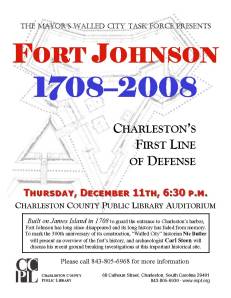
To mark the 300th anniversary of the construction of Fort Johnson, the Charleston Archive and the Mayor’s Walled City Task Force will be presenting a free program at the main branch of the Charleston County Public Library to raise public awareness of this site’s rich history. On Thursday, December 11th 2008, Dr. Nic Butler, manager of the Charleston Archive and historian for the Task Force, will provide an illustrated overview of the fort’s history, and archaeologist Carl Steen, of the Diachronic Research Foundation, will discuss his recent investigations at this important site. Please join us!

fort_johnson_flyerThursday, 11 December 2008
6:30 p.m.
Charleston County Public Library Auditorium
68 Calhoun Street

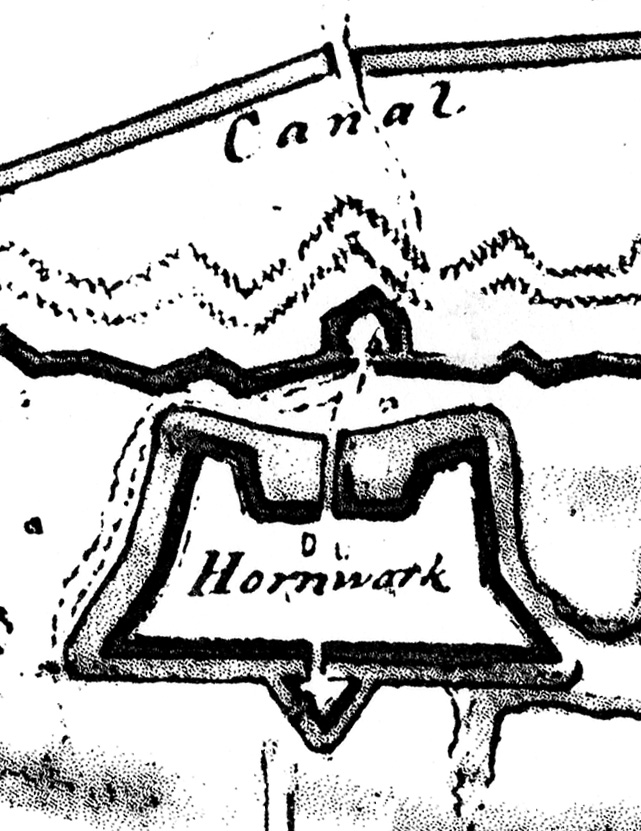
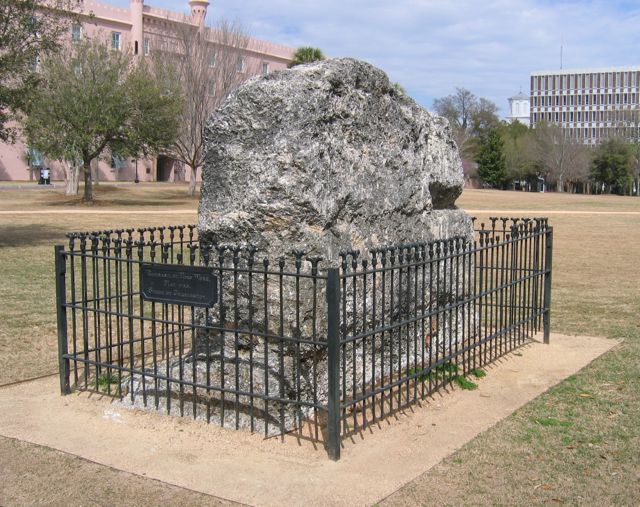
1781_horn_work.jpgOne of the most common questions that I’m asked at “Walled City” events is “where can I see part of the fortifications that once surrounded Charleston?” Almost equally as common is the question “what’s the story behind that mound of oyster shells standing in Marion Square?” In an attempt to answer both of these questions at one time, I’m offering a program later this month titled “The Horn Work: Charleston’s Tabby Fortress, 1759-1784.” The program will be presented at the Charleston County Public Library on Monday, April 28th at 6:00 p.m., and it’s free and open to the public. We’ll take a look at some historic illustrations of the old Horn Work (including the 1781 map shown above), and try to understand the lone remnant standing in Marion Square as a small part of what was once a large fortress mounting eighteen cannon and surrounded by a moat thirty feet wide. tabby_remnant_in_marion_square.jpgHow did the “Horn Work” get its name, and when was it built? When was it demolished, and why does one small piece survive above ground? Has anyone ever searched below ground to find further evidence of its walls? For the answers to these questions, plus many more fascinating details and images, please join the Mayor’s Walled City Task Force at the Charleston County Public Library on the 28th. For more details and a printable flyer (a PDF file), please see our Upcoming Events page. I hope to see you there!

« Previous PageNext Page »