programs


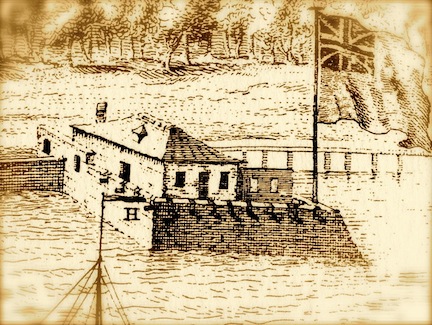
Don’t forget–Wednesday, May 22nd is the day for the illustrated lecture, “A Brief History of Broughton’s Battery, 1734–1784.”

The program starts at 6 p.m. in the 2nd Floor Classroom at the Charleston County Public Library, 68 Calhoun Street.

I hope to see a phalanx of Walled City fans there!


For those of you who were unable to attend the recent program discussing the graves found at the Gaillard Center, I’m pleased to announce that a video of the entire event is now available online. You can watch it at Youtube.com, or right here:

At the end of last week’s program, Dr. Eric Poplin, the leader of the team from Brockington and Associates that excavated the graves, agreed to return to the Charleston County Public Library after further laboratory research has been completed. Stay tuned–the follow-up event will probably take place towards the end of 2013.

We owe a special thanks to Dr. Eric Poplin for sharing his work with the Charleston community, and to CCPL’s own Kevin Crothers for creating and editing the video documentation.

Most of Charleston has been fascinated by the recent discovery of a previously unknown graveyard at the site of the Gaillard Center renovation project. In February and March of this year, a team led by Dr. Eric Poplin, senior archaeologist with Brockington and Associates, unearthed the remains of
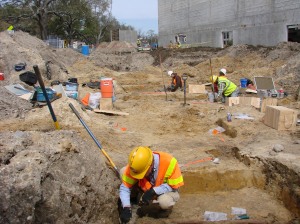
Dr. Poplin and the Brockington team

Dr. Poplin and the Brockington team

37 individuals who were laid to rest at that site, on the east side of Anson Street, sometime between 1680 and 1740. Many among the community are curious to know more about these people: Who are they? How and when did they die? Why were they interred at this spot–well outside of the “walled city”? Wouldn’t we all like to know the answers to these questions?

Well, now’s your chance to hear the latest conclusions from the experts. The Charleston County Public Library invites the public to a free program on Wednesday, May 1st, 2013, at 6 p.m. CCPL’s public historian, Dr. Nic Butler, will provide a brief overview of this early history of the site on which the Gaillard Center now stands, and then introduce the featured guest, Dr. Eric Poplin, who will describe the discovery and excavation of the bodies. Using photographs and maps, Dr. Poplin will discuss the clues discovered in the graves that inform his conclusions about the dates of the burials and the status of the individuals interred there. We may not have all the answers at this early date in the research process, but we hope to give the public a better understanding of this fascinating discovery in Charleston’s own backyard. So please join us for

“Graves at the Gaillard Center: The Rediscovery of a Forgotten Resting Place”

Charleston County Public Library Auditorium

68 Calhoun Street

Wednesday, May 1st 2013

6:00 p.m.

Over the past several months I’ve presented lectures surveying the history of the brick fortifications built along Charleston’s eastern waterfront. From Granville’s Bastion at the south end to Craven’s Bastion at north end, approximately seven million bricks were laid between 1696 and 1713. These defensive works stood until the 1780s, and their foundations remain under our streets at sidewalks today.

Profile of an earthen entrenchment by John Muller

Profile of an earthen entrenchment by John Muller

But what about the early walls that surrounded the north, west, and south sides of the town? What about Colleton’s Bastion, Ashley’s Bastion, Carteret’s Bastion, and Johnson’s Ravelin? The surviving documentary evidence suggests that these fortifications were made of earth and wood rather than brick, and conceived from their inception to serve as temporary works. Details of their construction are sparse, but they are certainly interesting. When and where were these earthen structures built, and what did they look like? Please join me for an illustrated survey of this fascinating part of our city’s military history.

“Earthen Entrenchments and Bastions in Charleston, 1703–1734

Wednesday, March 27, 2013 at 6:30 p.m.

2nd Floor Classroom,

Charleston County Public Library

68 Calhoun Street

1739 View of Craven's Bastion

1739 View of Craven’s Bastion

Craven’s Bastion was built in the early 1700s and formed the northeast corner of the colonial “walled city” of Charleston. During the war with Spain in the 174os, scores of Spanish prisoners were housed here in miserable conditions. During the British occupation of the city in 1780–82, Craven’s Bastion was used as a civilian jail and headquarters of the “town police.” Like the rest of Charleston’s colonial fortifications, the bastion was demolished after the American Revolution, however, and the remnants of its brick walls are now hidden under East Bay Street and the steps of the U.S. Custom House (built 1853–79). Using clues from colonial-era documents and new archaeological technology, it might it be possible to pinpoint its precise location and dimensions. Please join Dr. Nic Butler for an illustrated overview of this important Charleston landmark.

“A Brief History of Craven’s Bastion, 1703–1789”

Wednesday, February 27, 2013 at 6:30 p.m.

2nd Floor Classroom,

Charleston County Public Library

68 Calhoun Street

« Previous PageNext Page »